Project
From Colonies to Carriers
A digital history project tracing how newly independent African states used civil aviation to project sovereignty, establish national identity, and build postcolonial institutions — with a case study on Royal Air Maroc.
 View detail ↗
 My role, areas & skills
The objective
Reconstruct fragmented airline records and explain how African states used civil aviation to build institutions and communicate national identity.
What I did
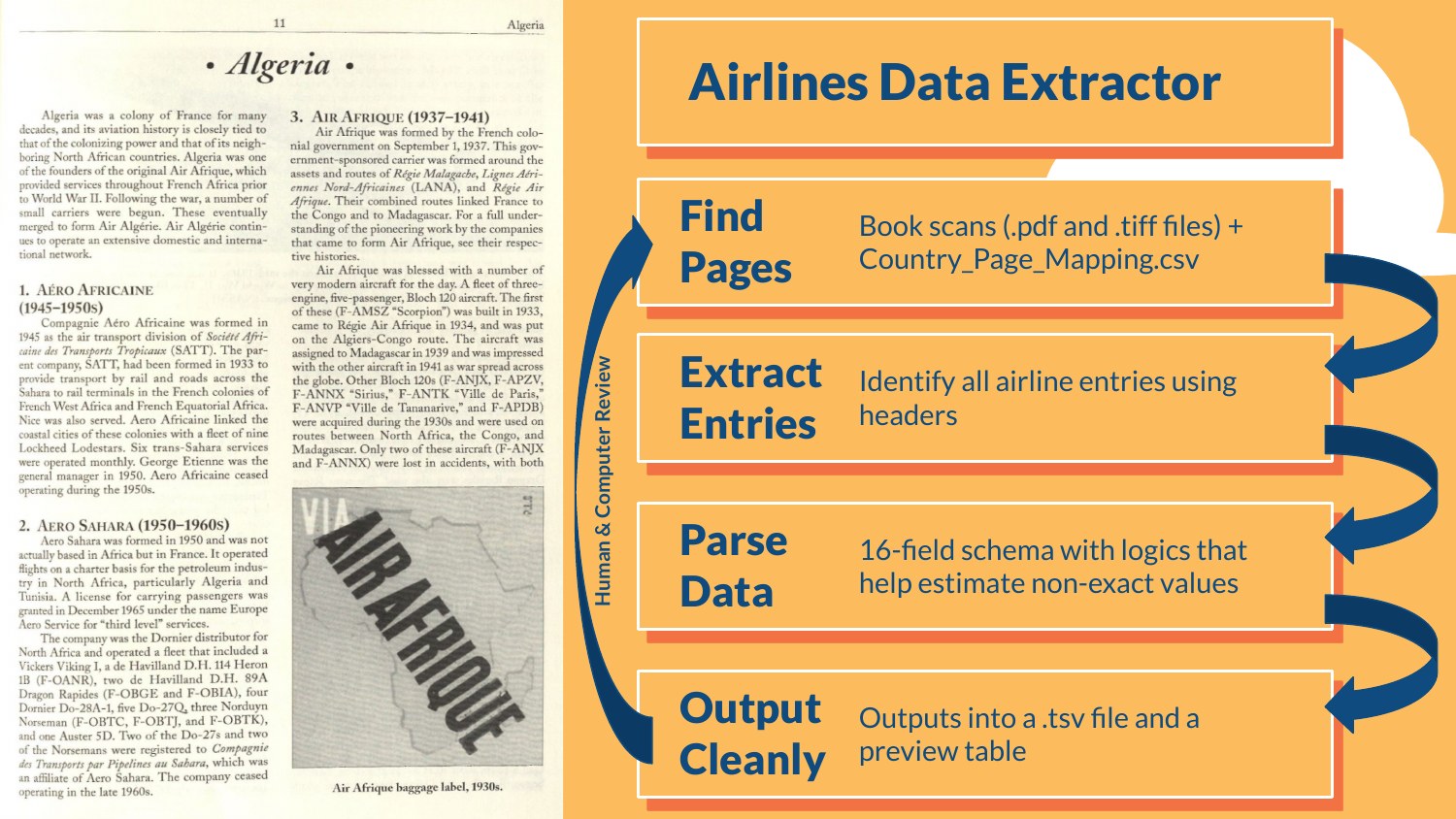
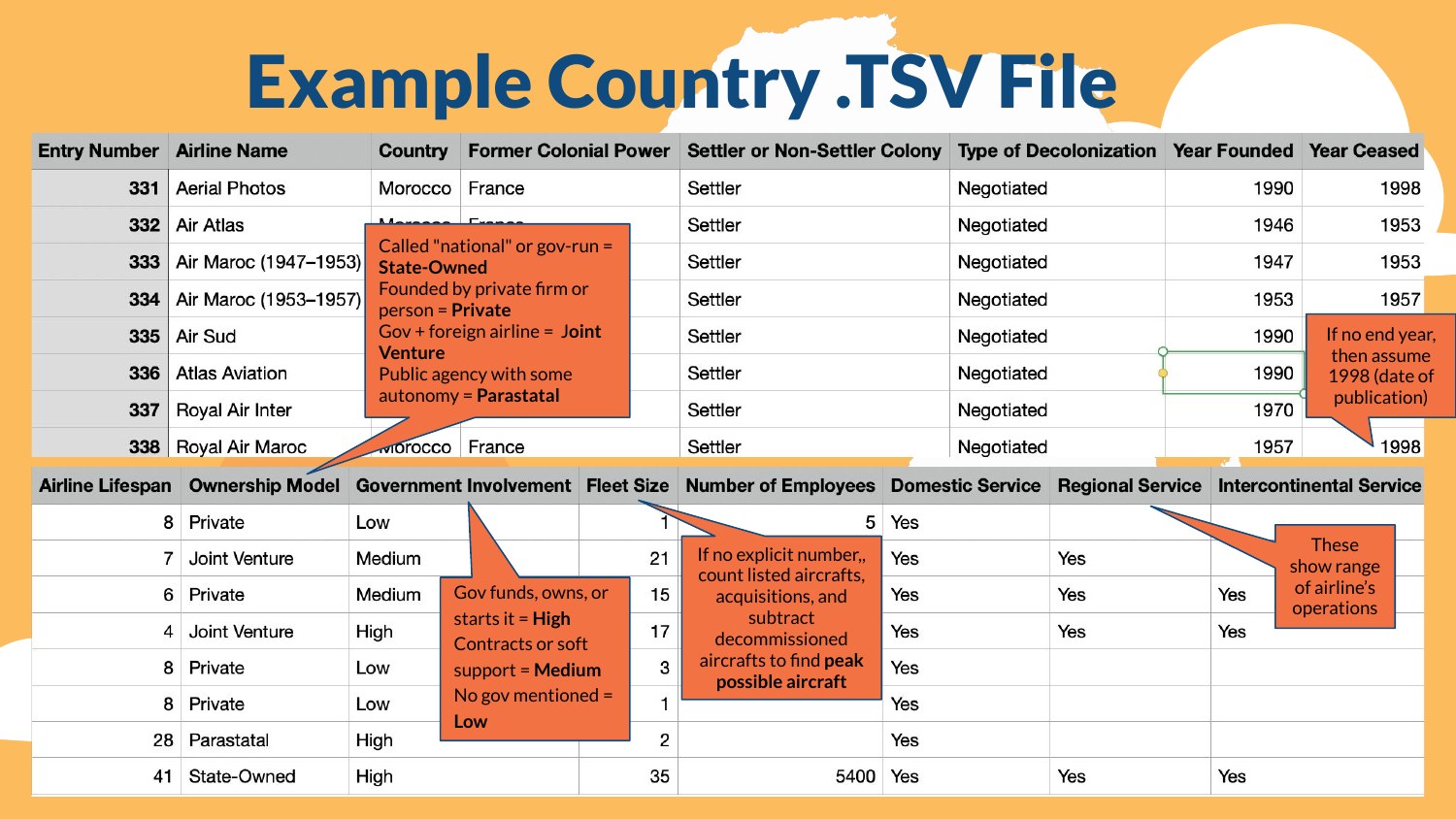
- Organized historical airline entries into structured records, with attention to incomplete sources and provenance.
- Connected the broader dataset to a Royal Air Maroc case study through maps, ridership visuals, a written argument, and a presentation.
Deliverables
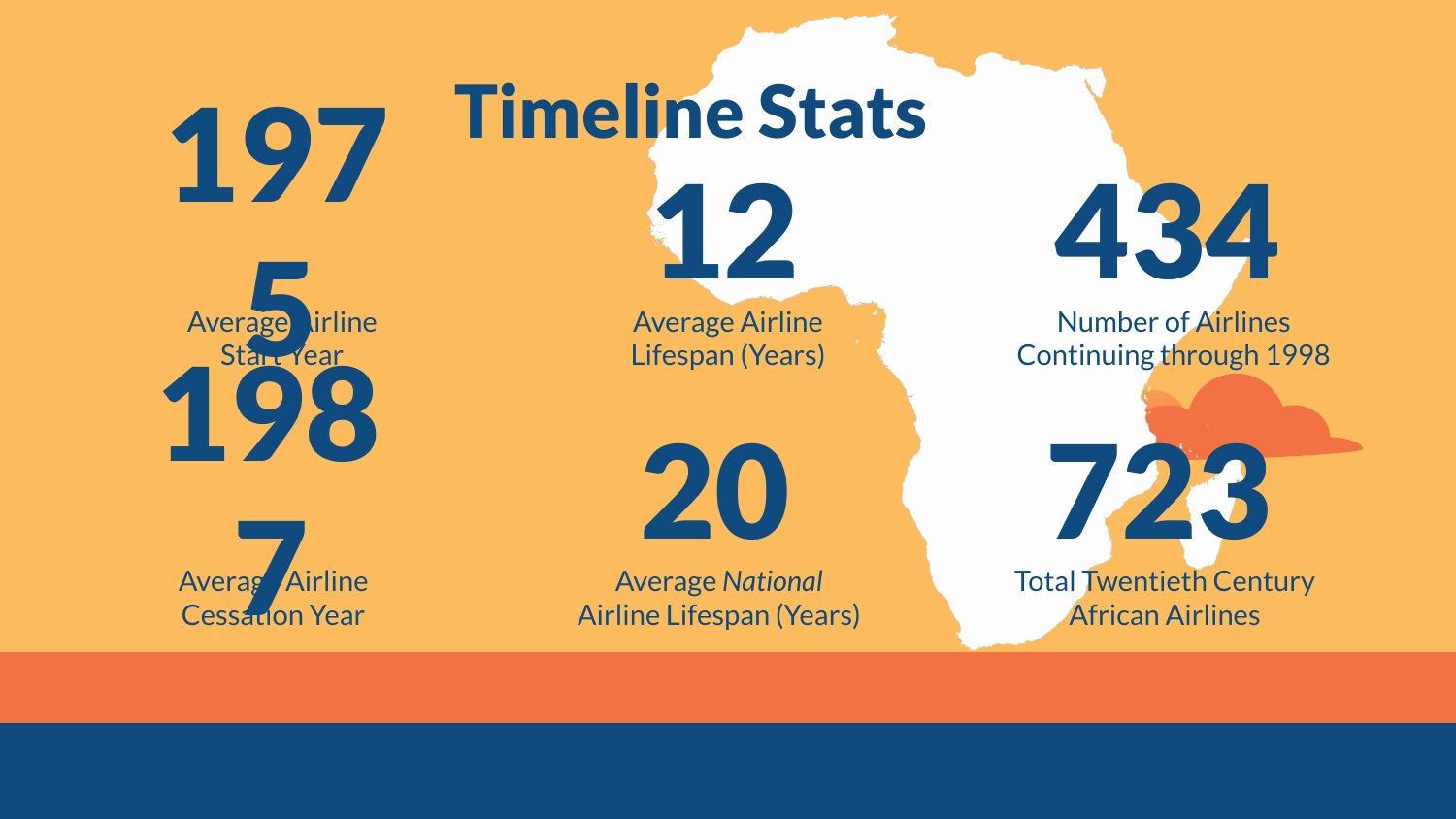
- A searchable encyclopedia with 723 airline records.
- A separate downloadable 59-row, 16-field CSV extract, a presentation deck, a working-paper excerpt, and maps.
Result
The project makes a dispersed body of evidence browseable through country, time, and institutional views. The downloadable CSV is an extract, not the full encyclopedia; incomplete historical records remain a limitation.
Digital history / Research
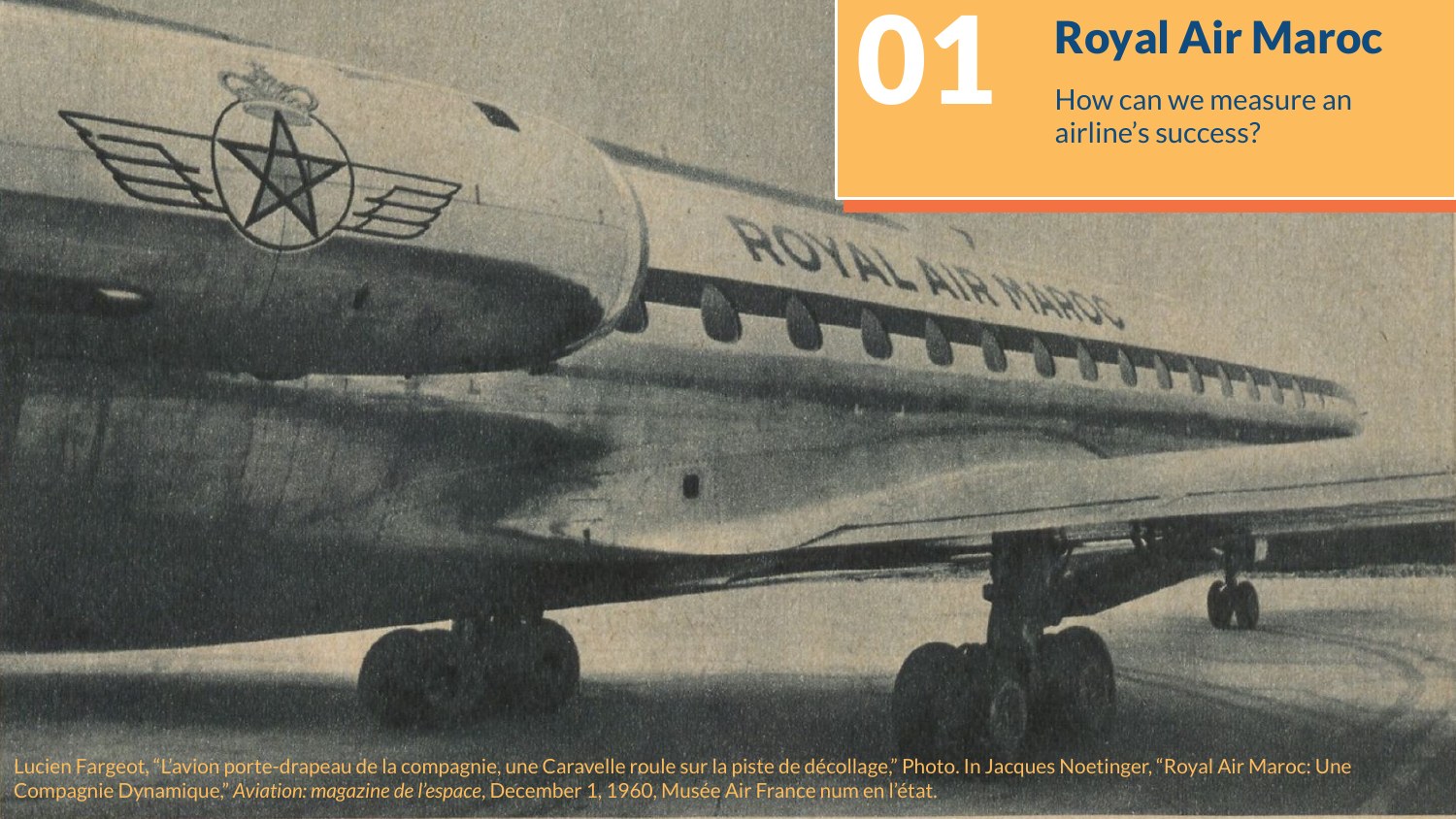
Royal Air Maroc, 1957–1970
An illustrative reconstruction of the early network from Casablanca. Curves connect destinations schematically; opening years are approximate.
Approximate route chronology · 1957–1970
 Enlarge slide ↗
  Enlarge slide ↗
  Enlarge slide ↗
  Enlarge slide ↗
  Enlarge slide ↗
  Enlarge slide ↗
  Enlarge slide ↗
  Enlarge slide ↗
  Enlarge slide ↗
  Enlarge slide ↗
  Enlarge slide ↗
  Enlarge slide ↗
  Enlarge slide ↗
  Enlarge slide ↗
  Enlarge slide ↗
  Enlarge slide ↗
  Enlarge slide ↗
  Enlarge slide ↗
  Enlarge slide ↗
  Enlarge slide ↗
  Enlarge slide ↗
  Enlarge slide ↗
  Enlarge slide ↗
  Enlarge slide ↗
  Enlarge slide ↗
  Enlarge slide ↗
  Enlarge slide ↗
 Use the controls to browse 27 slides. Select an image for a larger view, or open the PDF.
Read extracted slide text
Text extracted from the original PDF. Image-only slides and visual relationships are not fully represented here; consult the slide image and the written project narrative.
Slide 1
Slide 2
Slide 3
Slide 4
Slide 5
Slide 6
Slide 7
Slide 8
Slide 9
Slide 10
Slide 11
Slide 12
Slide 13
Slide 14
Slide 15
Slide 16
Slide 17
Slide 18
Slide 19
Slide 20
Slide 21
Slide 22
Slide 23
Slide 24
Slide 25
Slide 26
Slide 27
Written paper
Overview
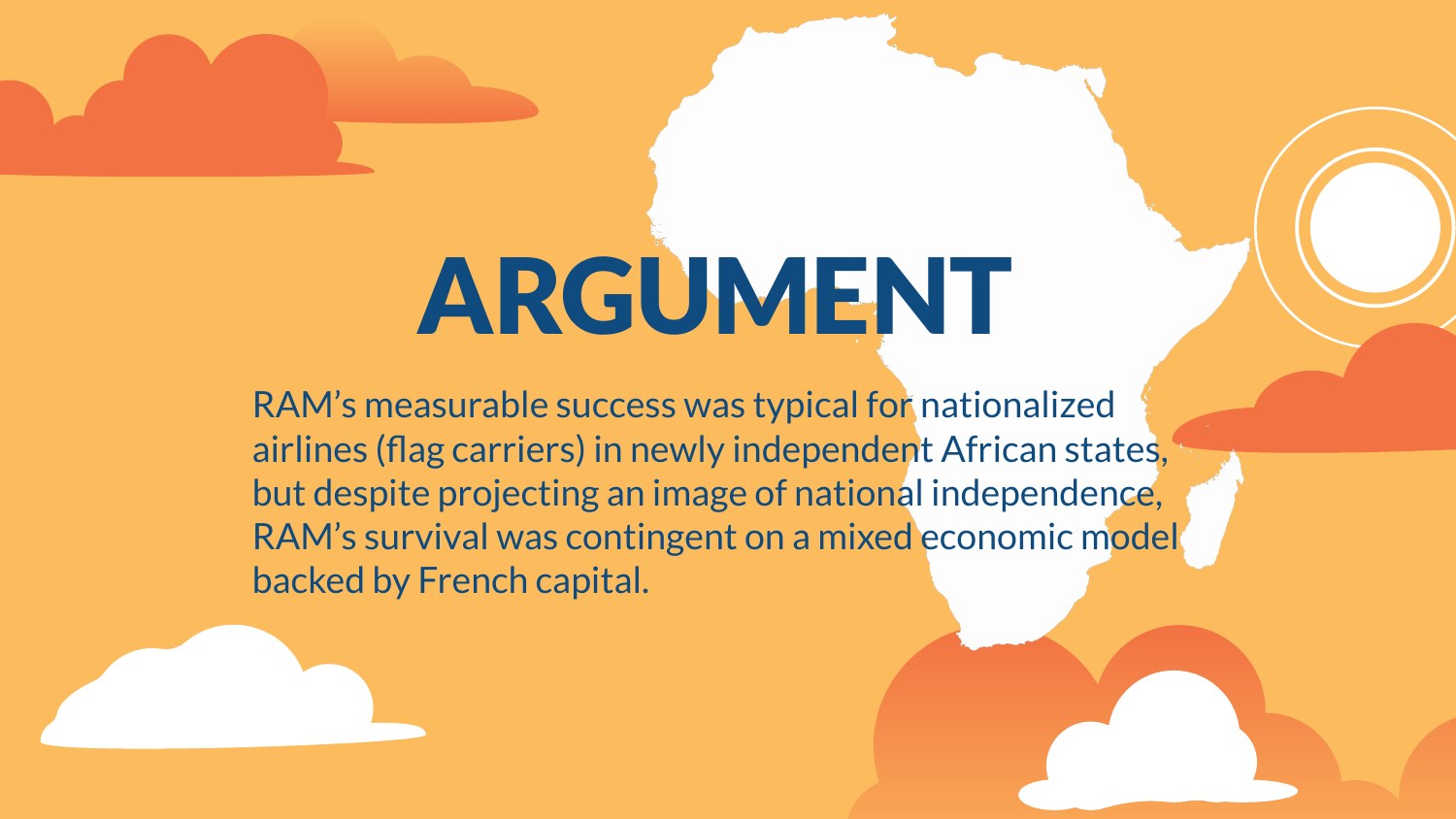
When African states achieved independence in the late 1950s and 1960s, establishing a national airline was rarely a matter of economic logic alone. An airline was a flag, a symbol of sovereignty, and a daily assertion that the new state existed and belonged in the world.
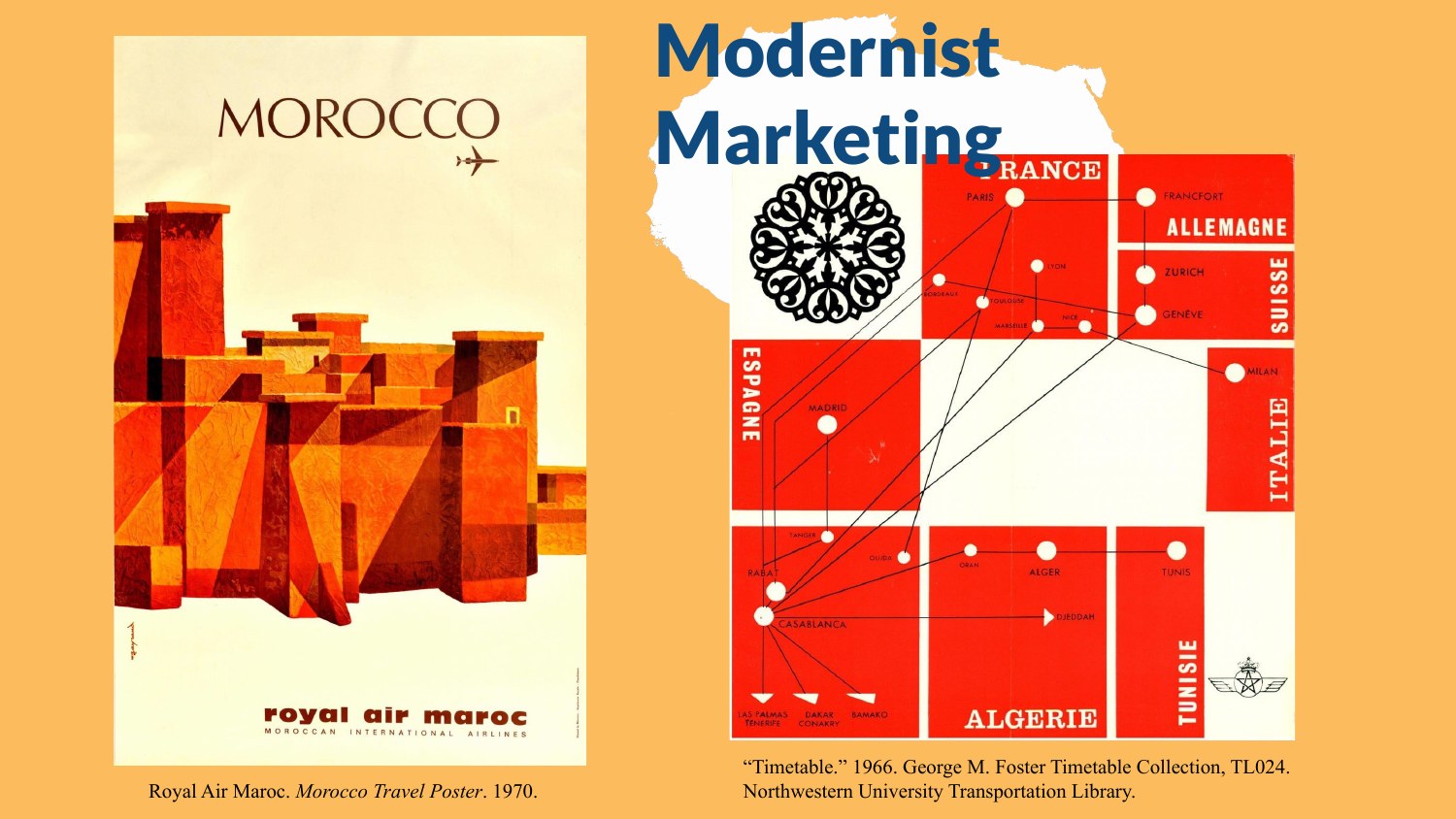
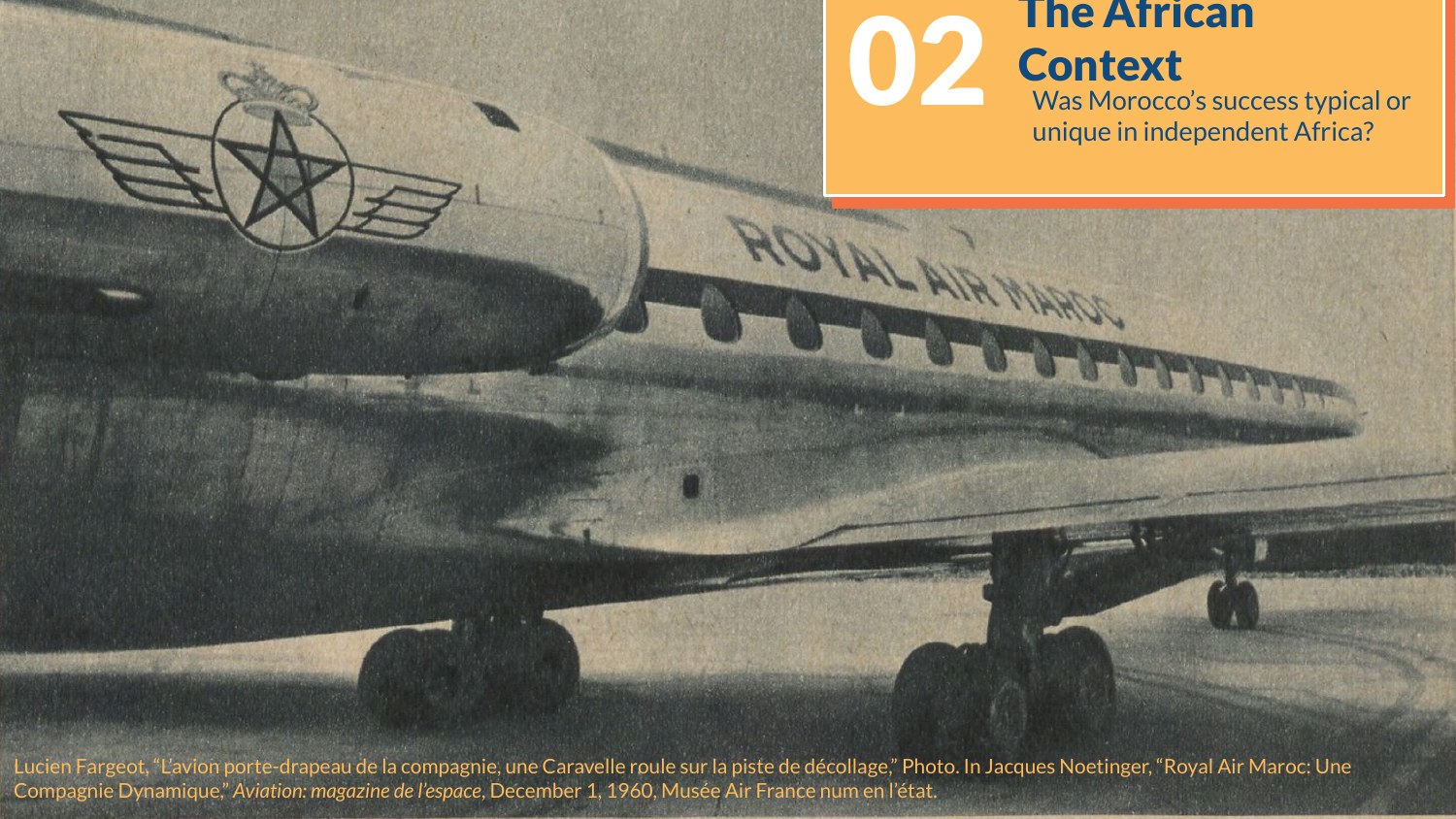
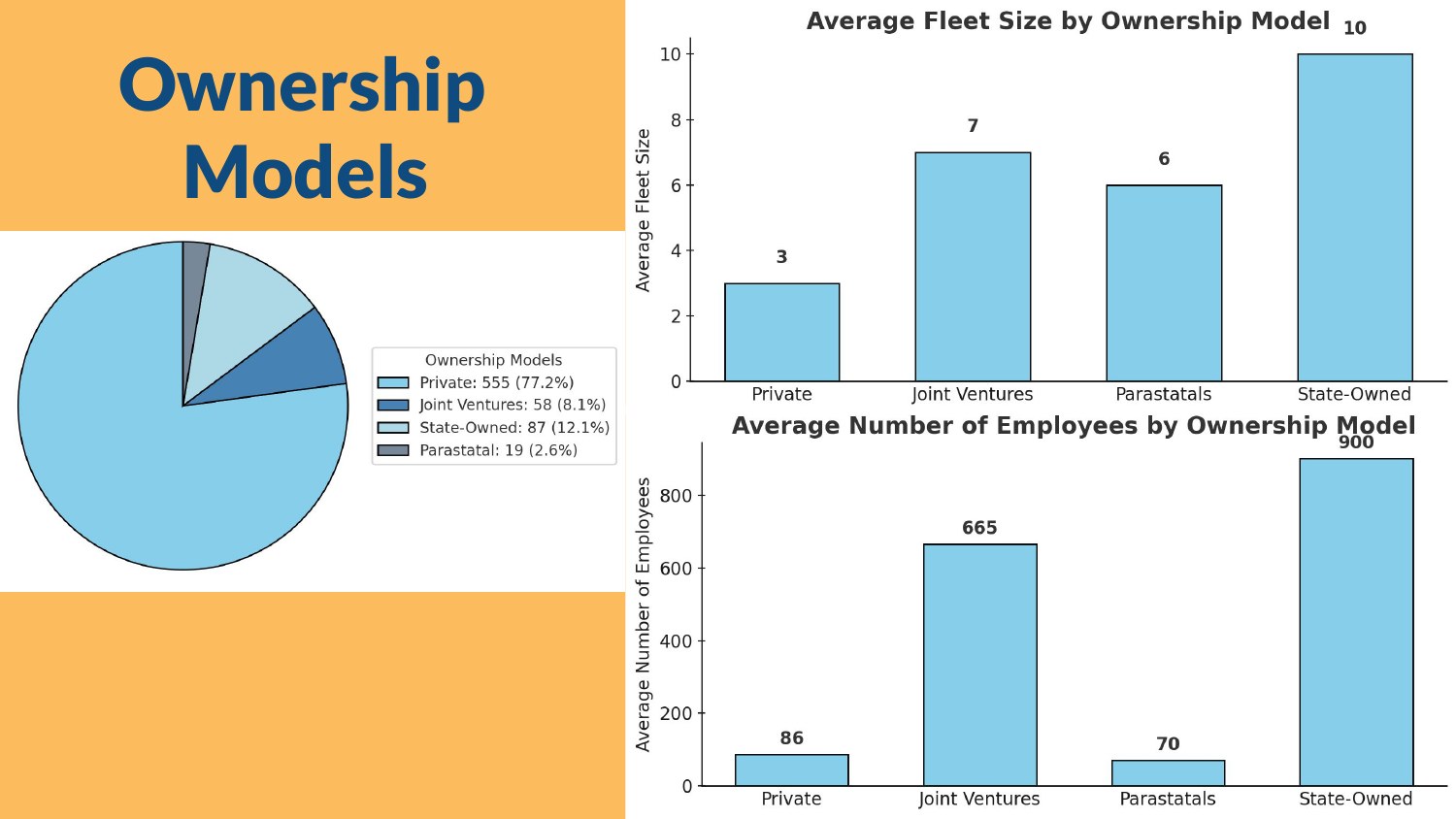
This project uses Royal Air Maroc as the close case while placing Morocco inside a wider African pattern of national carriers, joint ventures, state backing, foreign capital, and uneven institutional survival.
What the deck shows
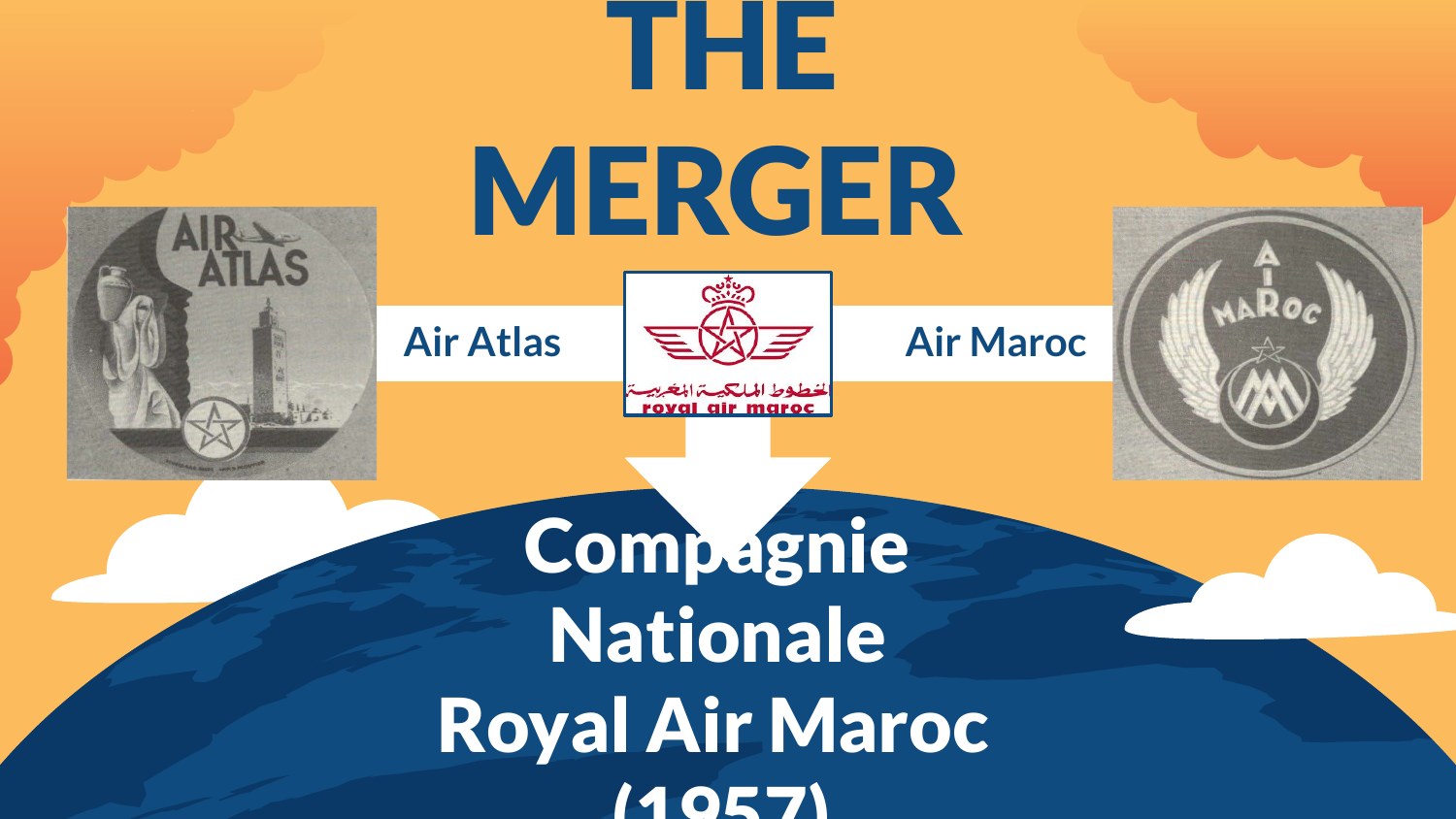
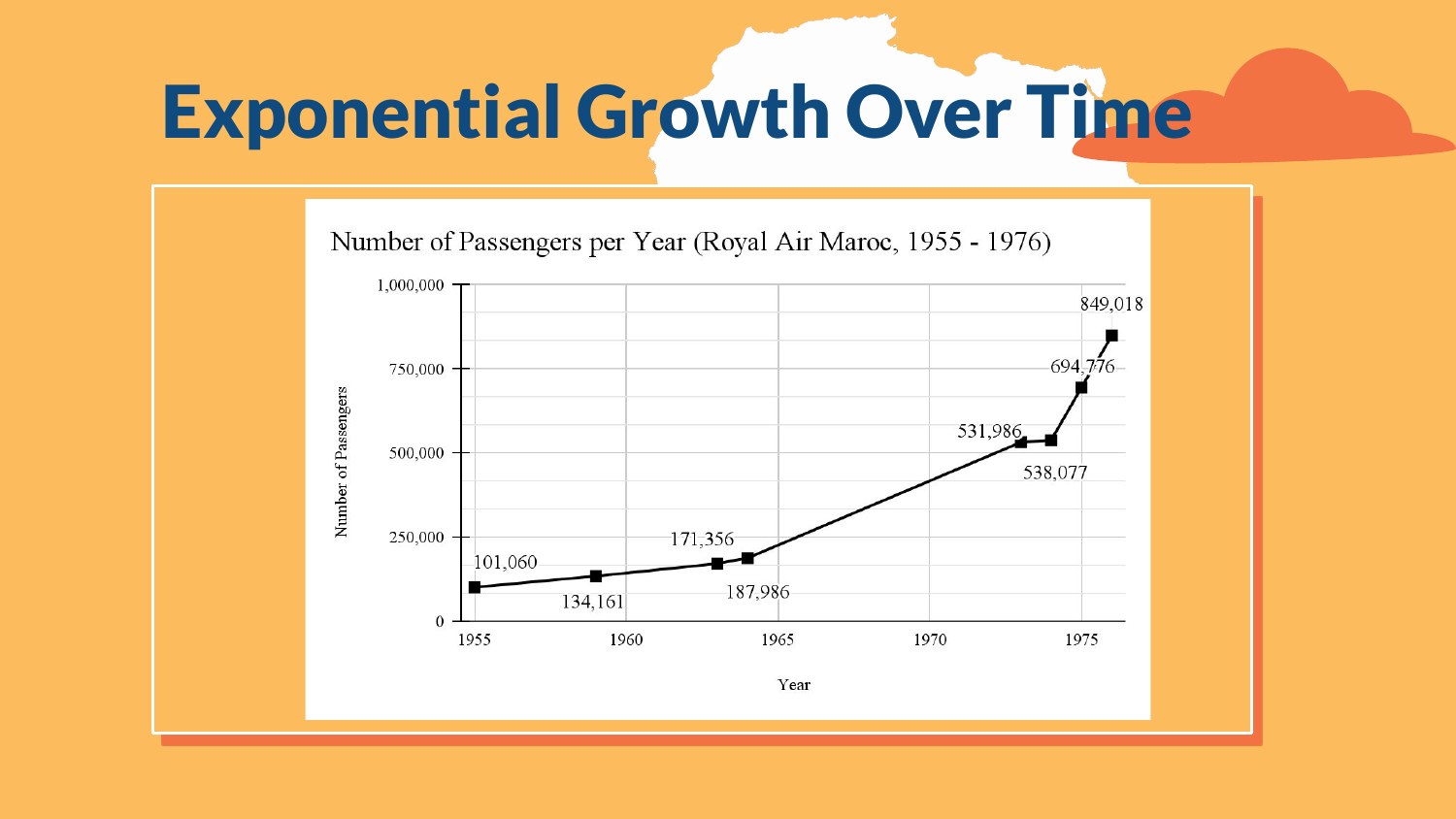
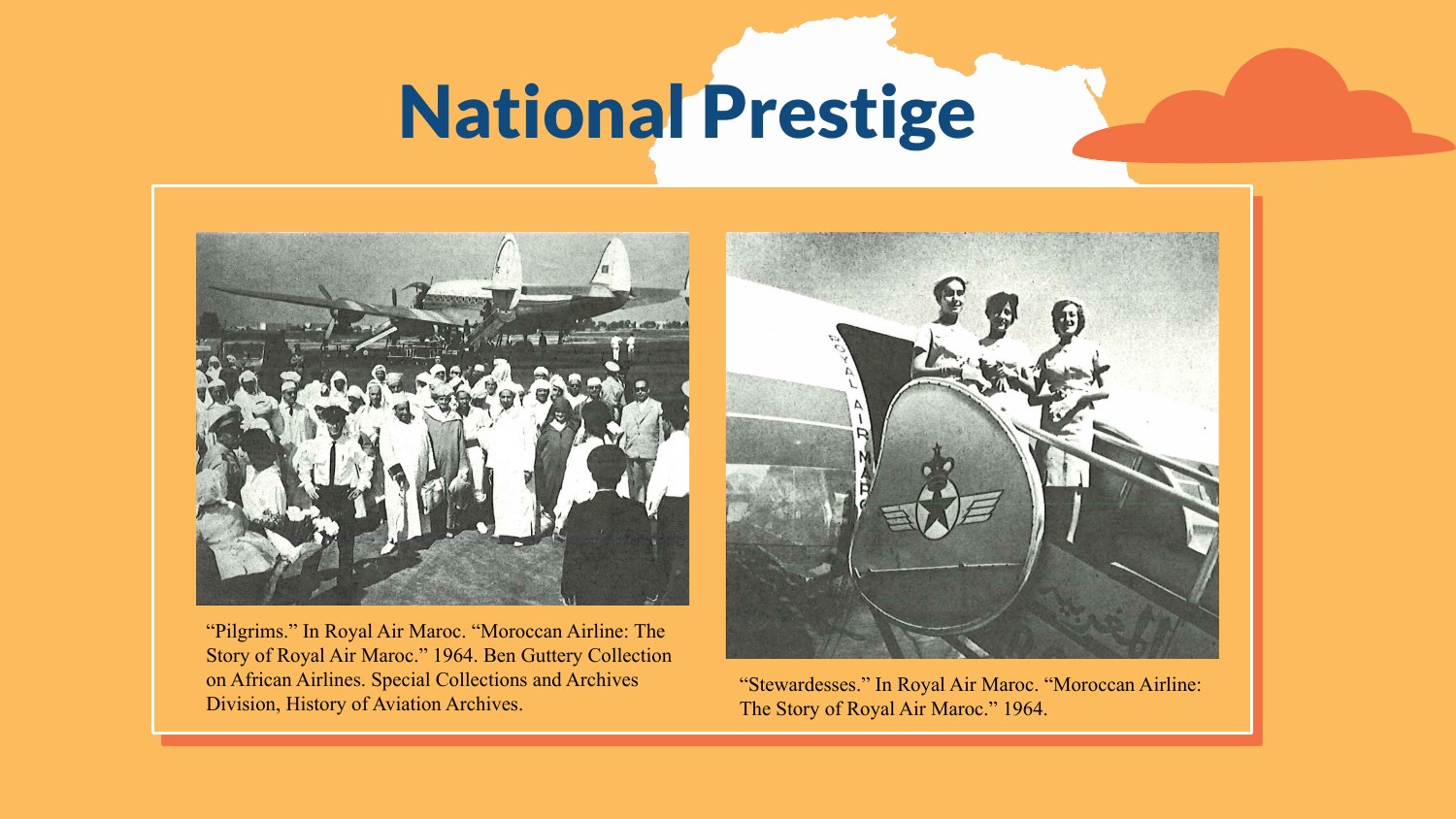
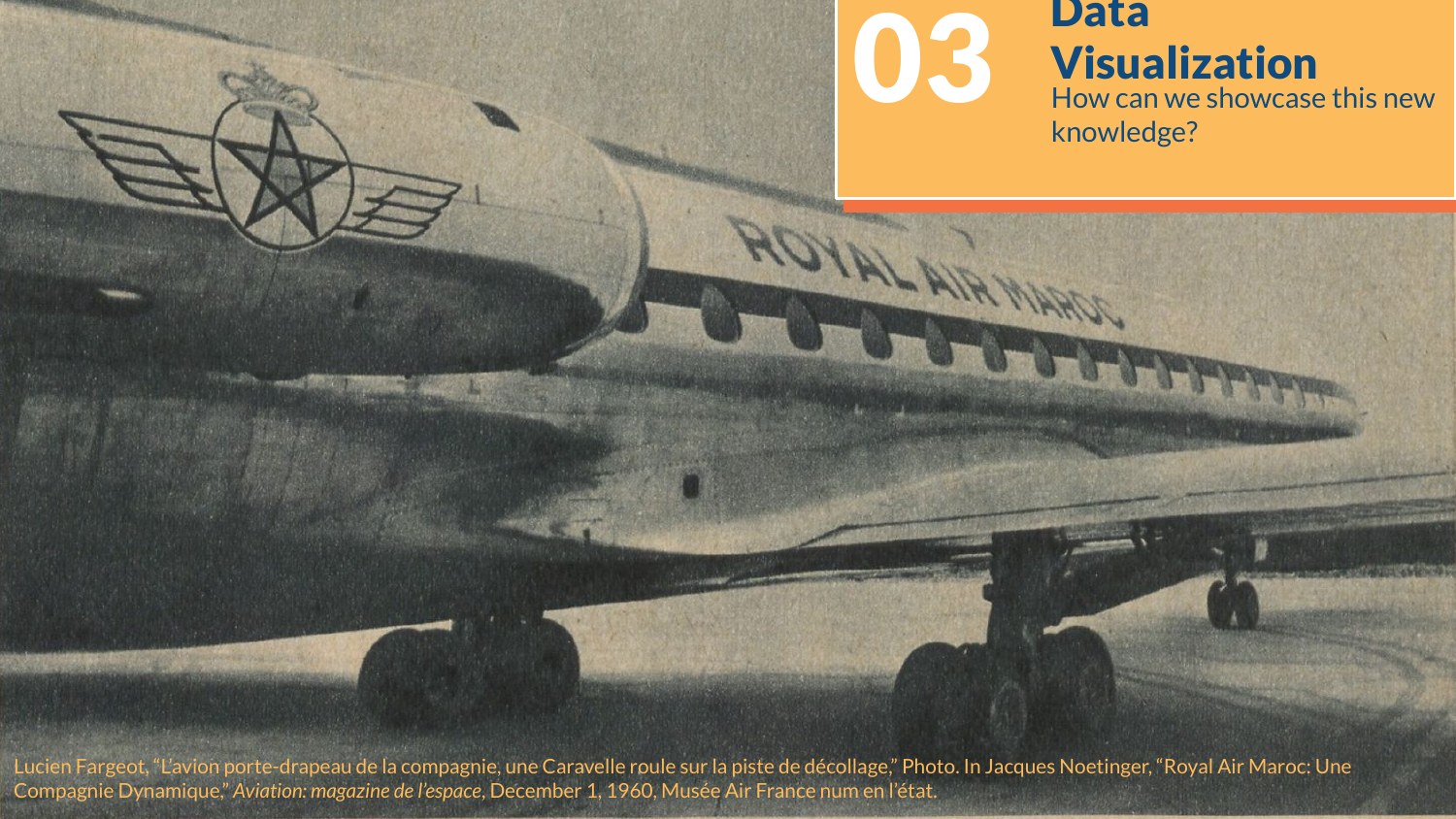
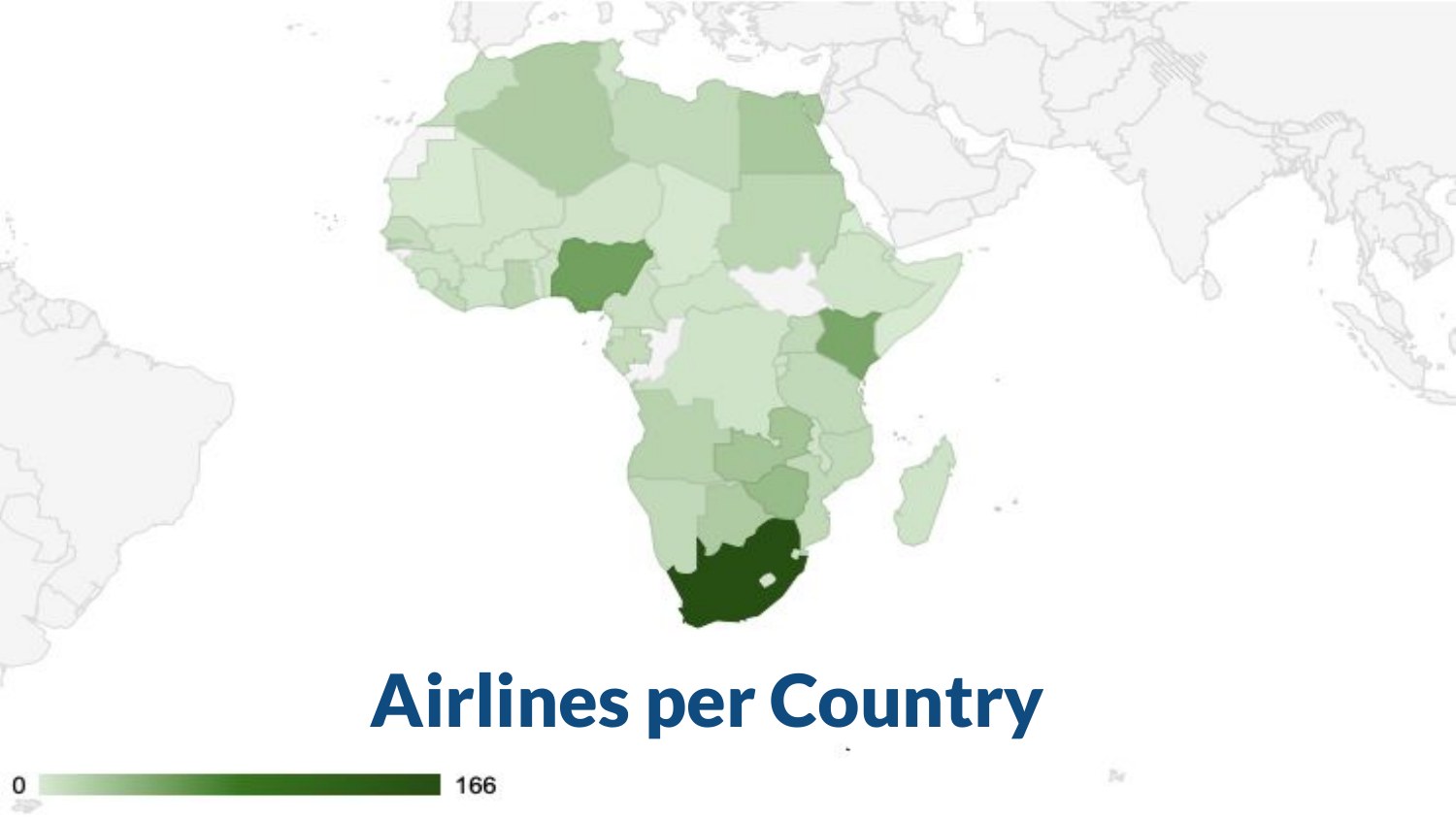
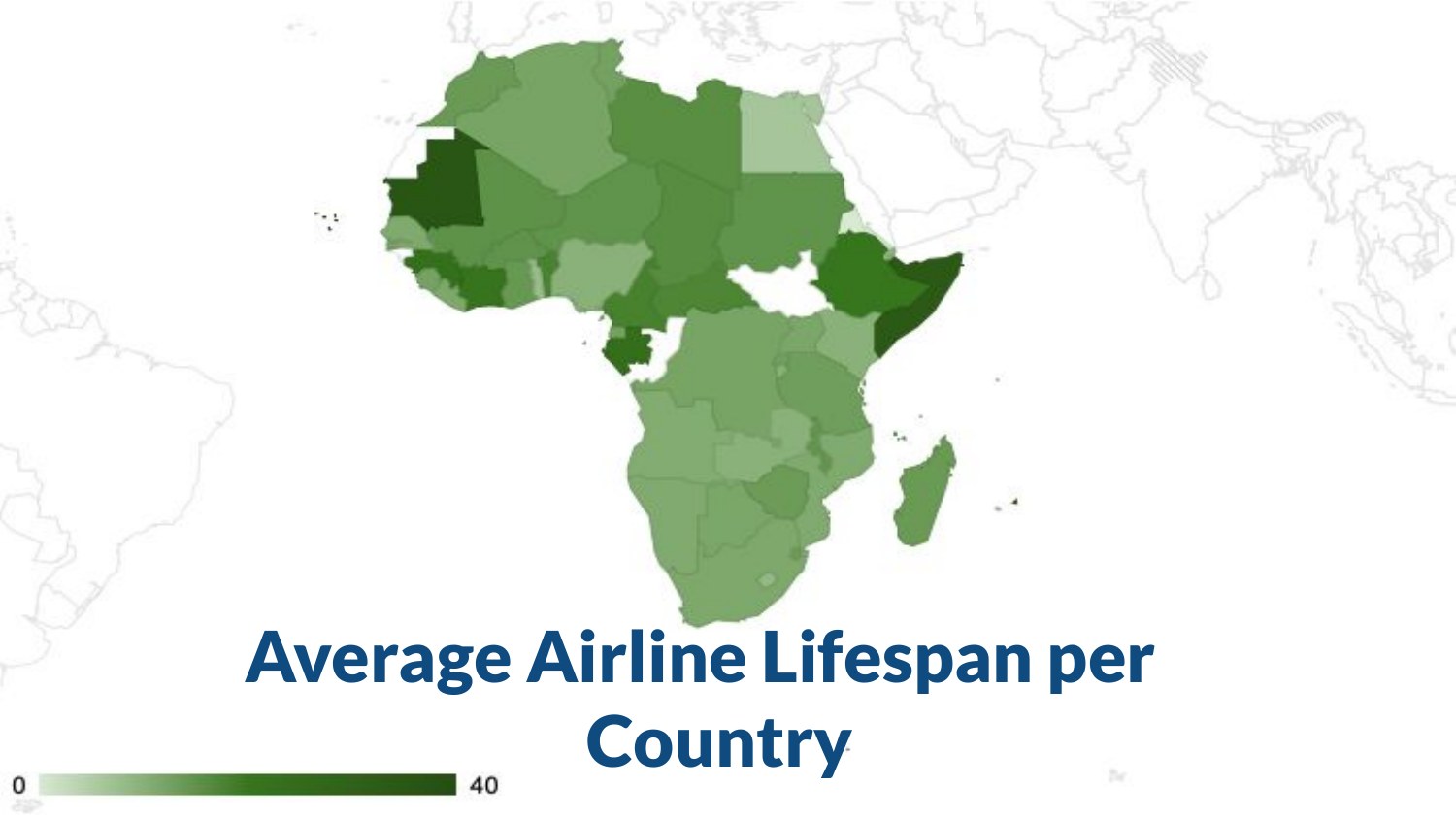
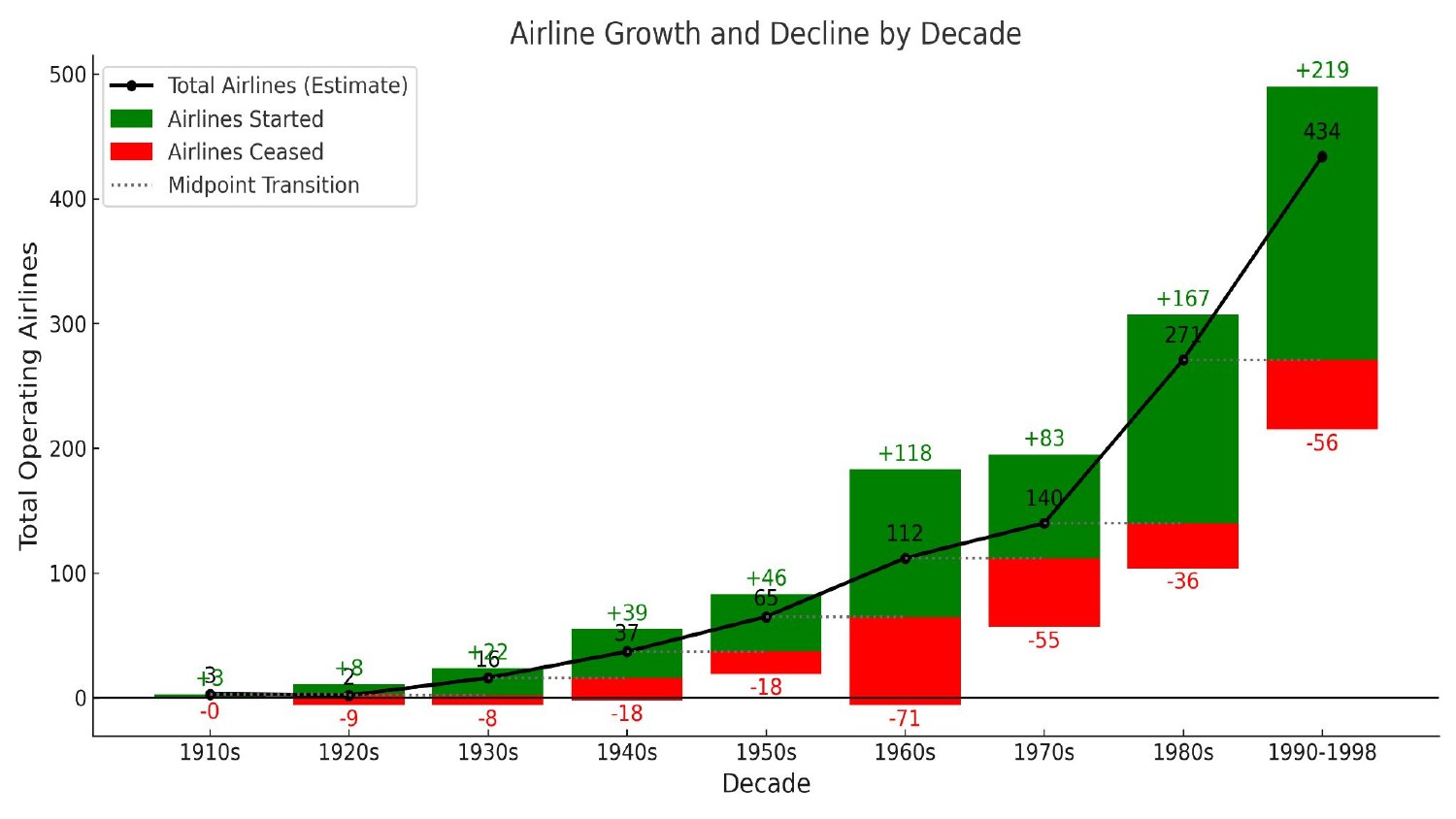
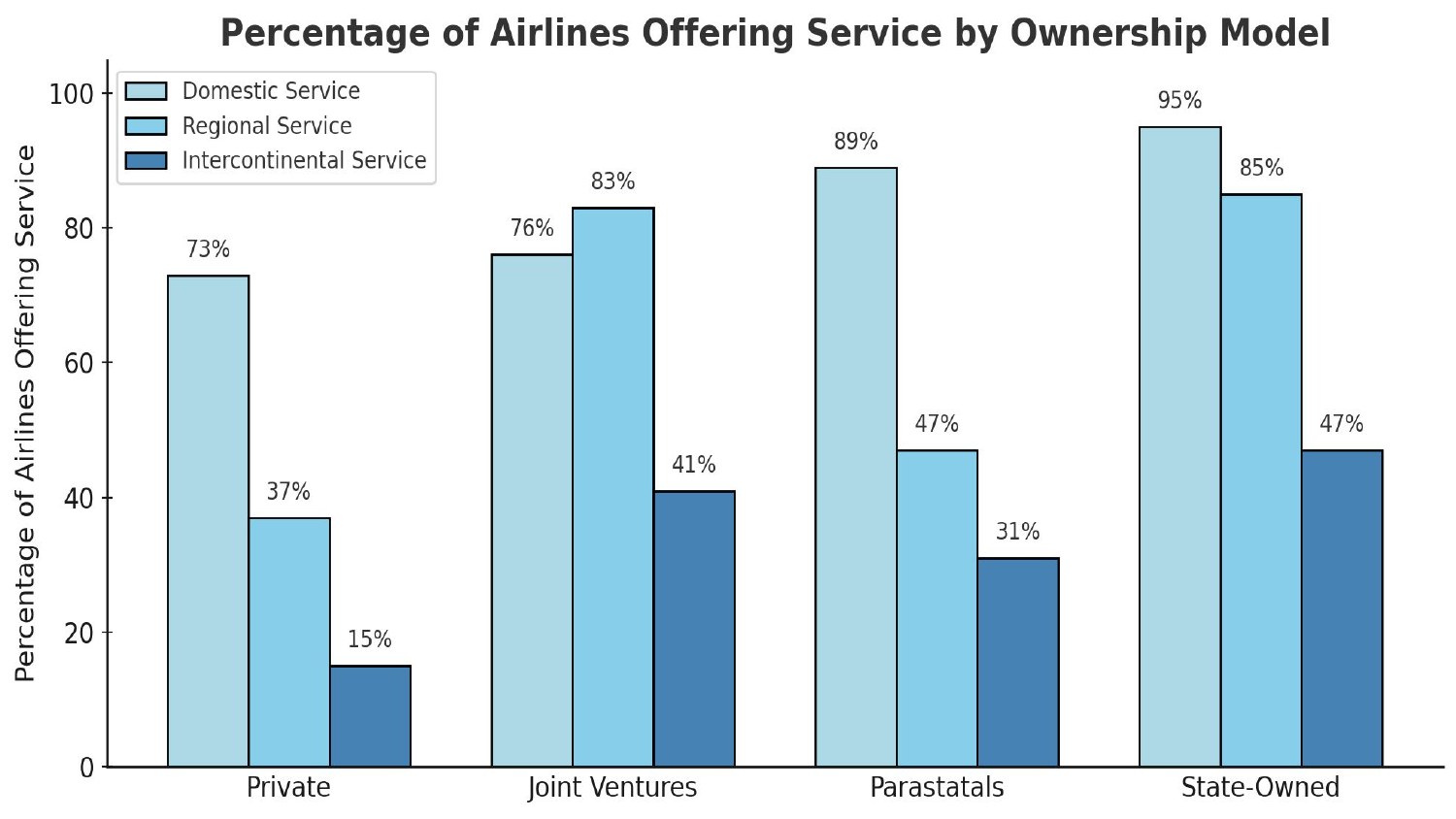
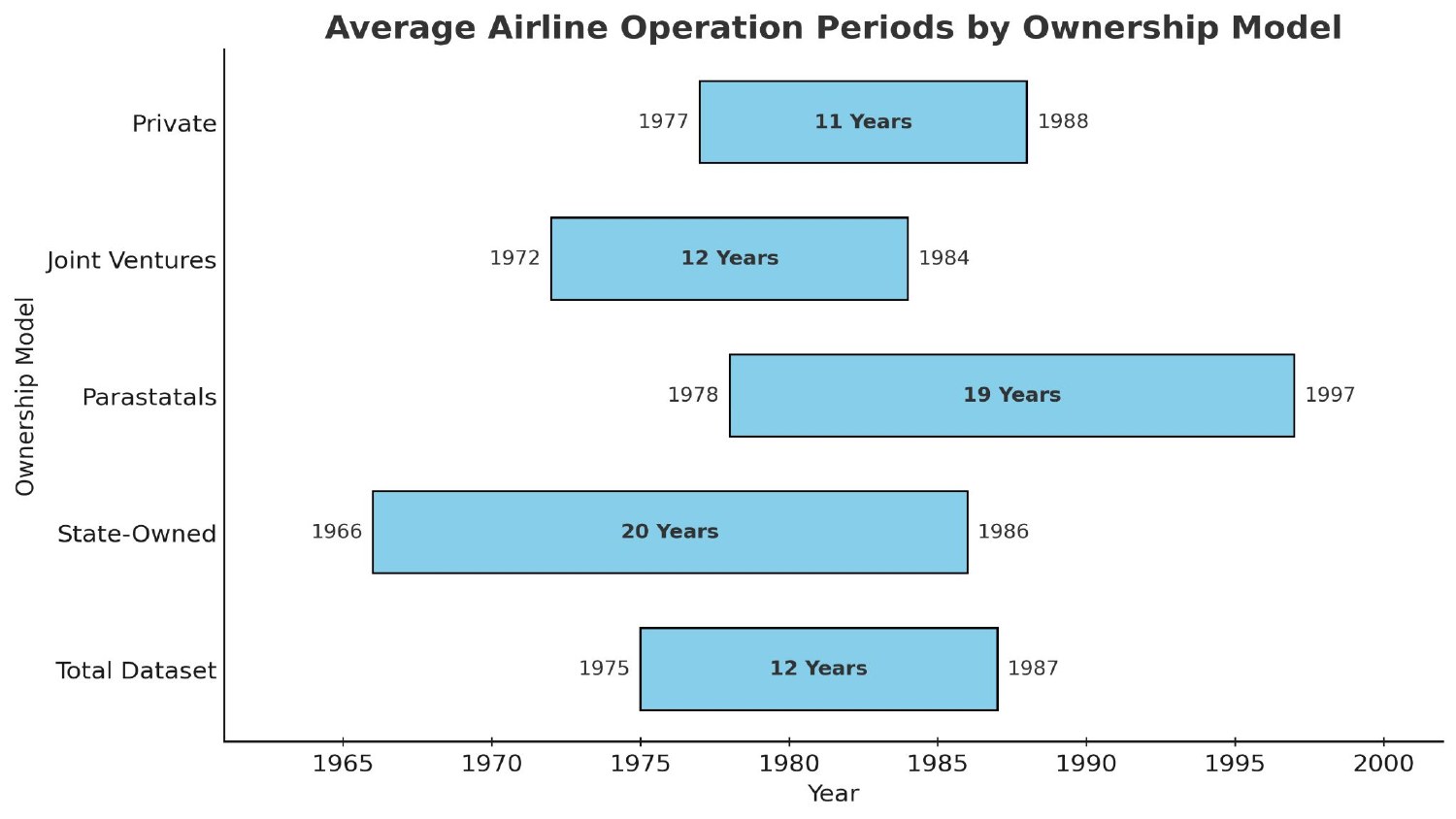
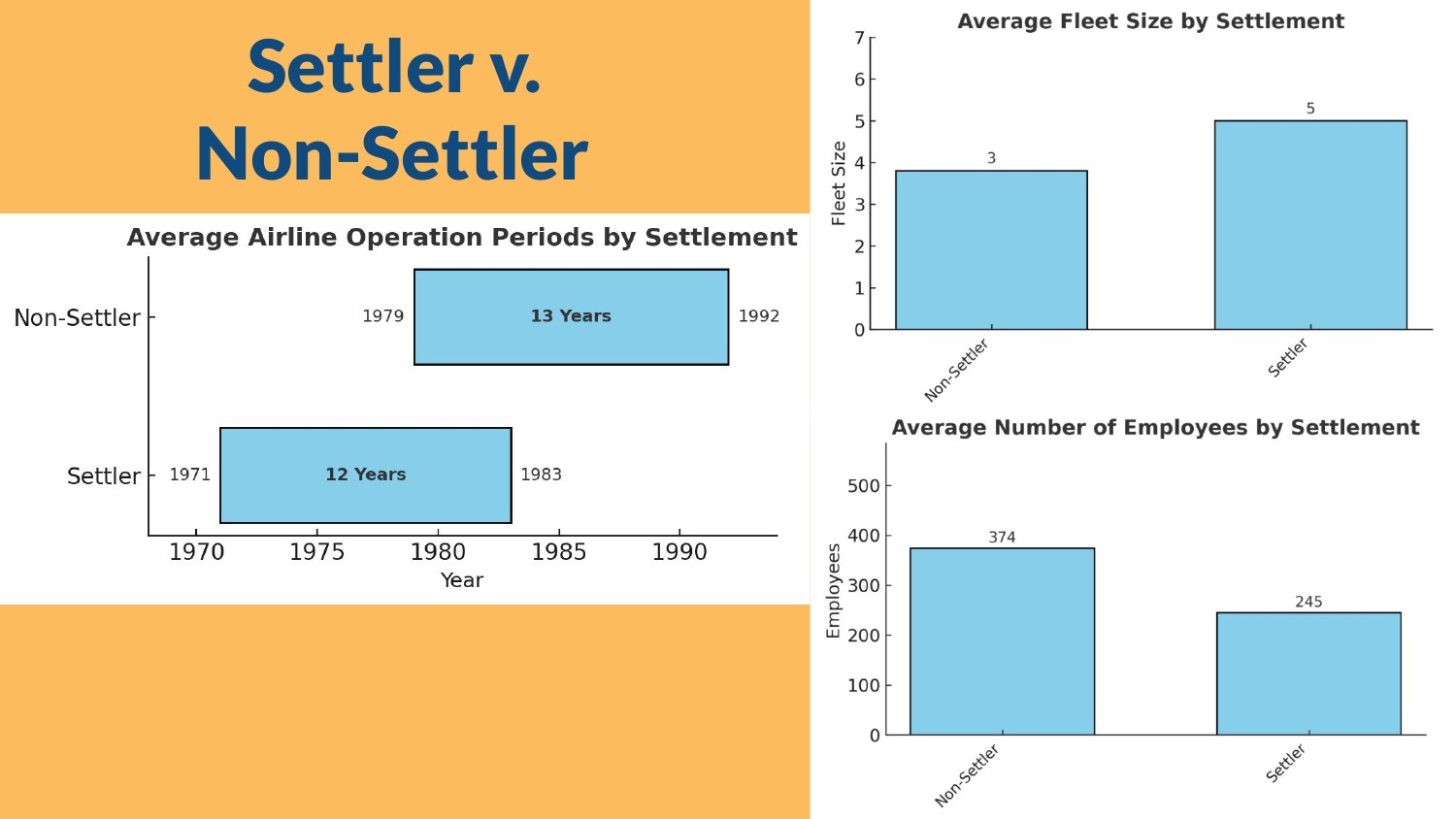
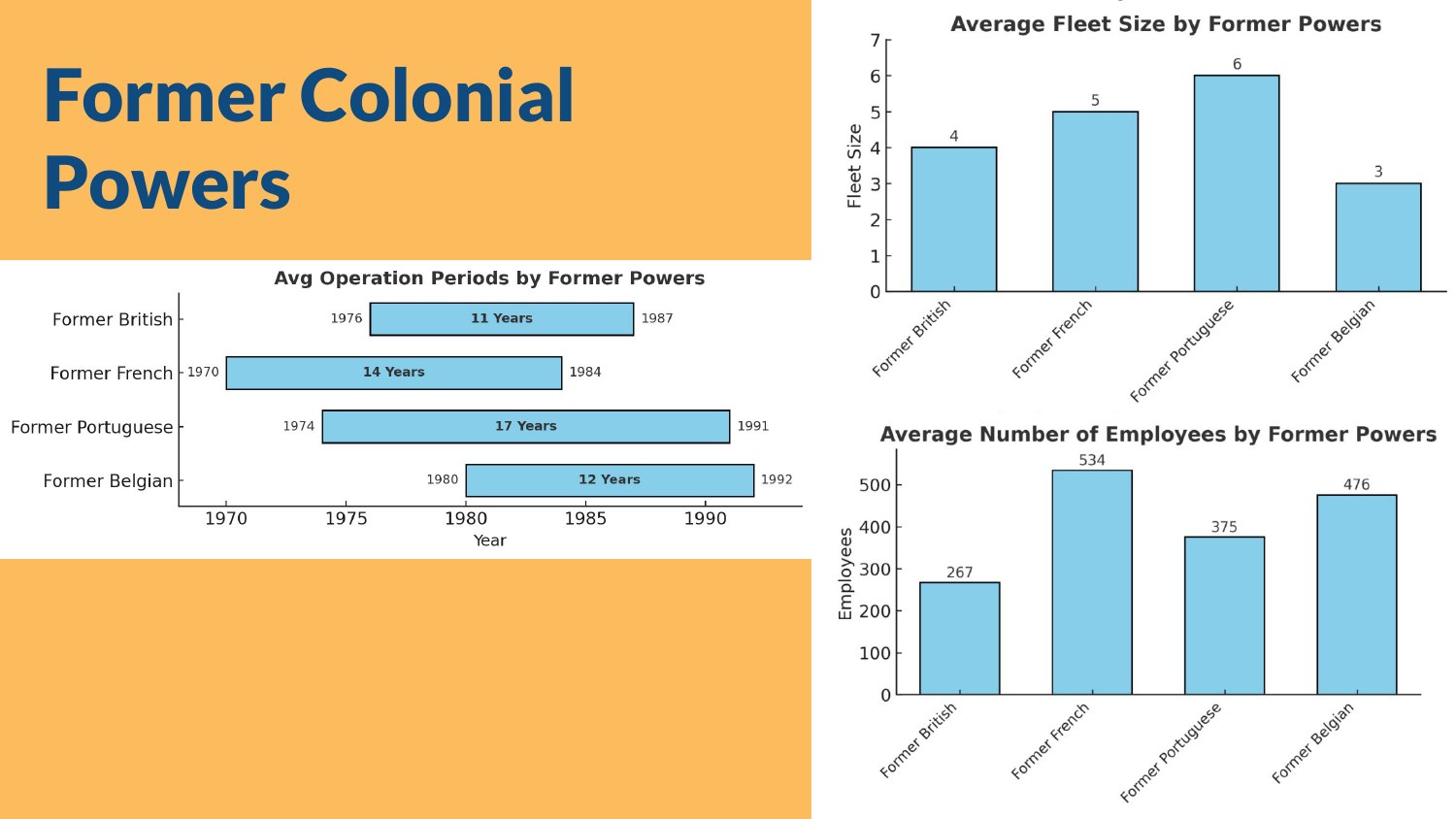
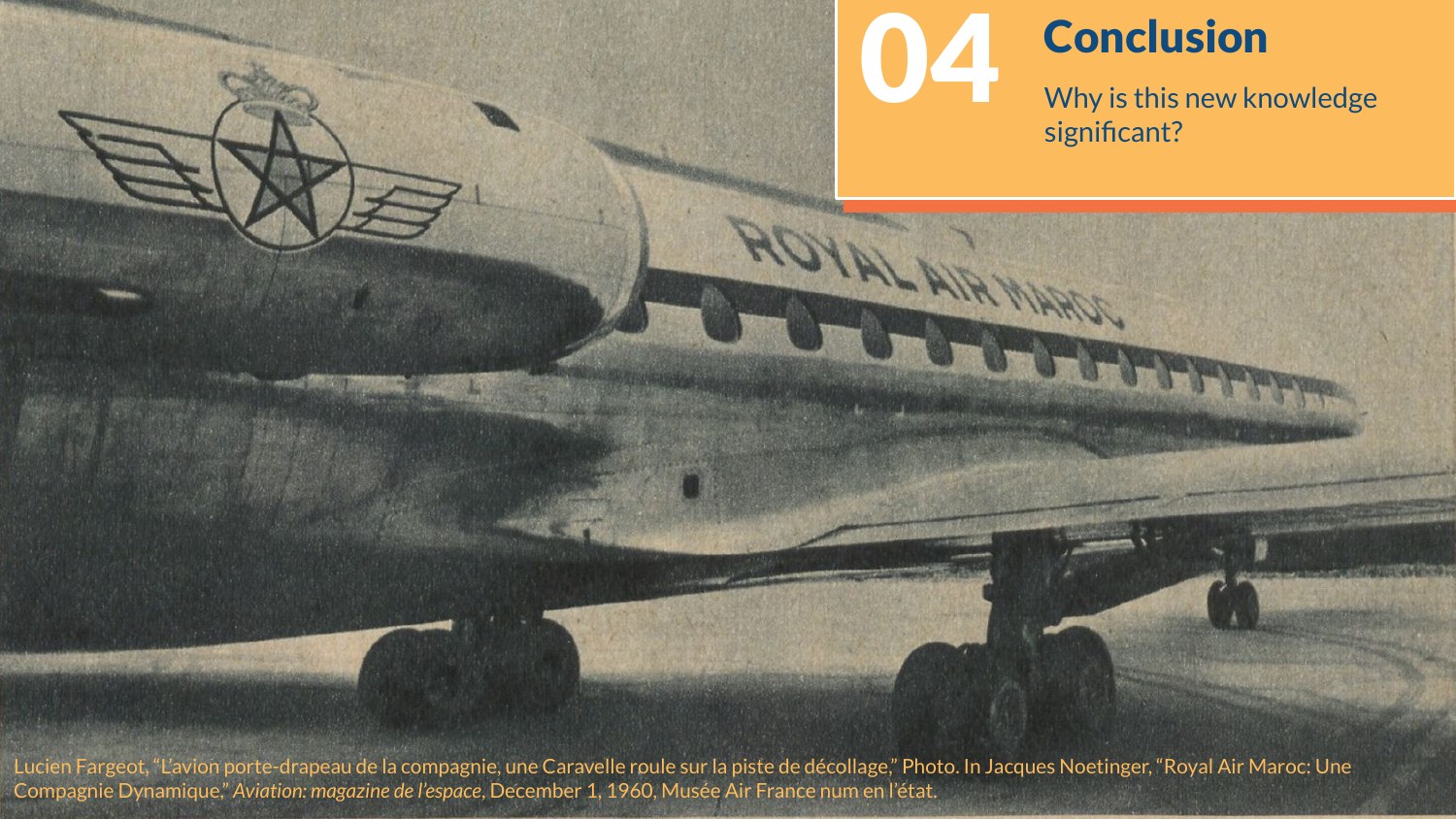
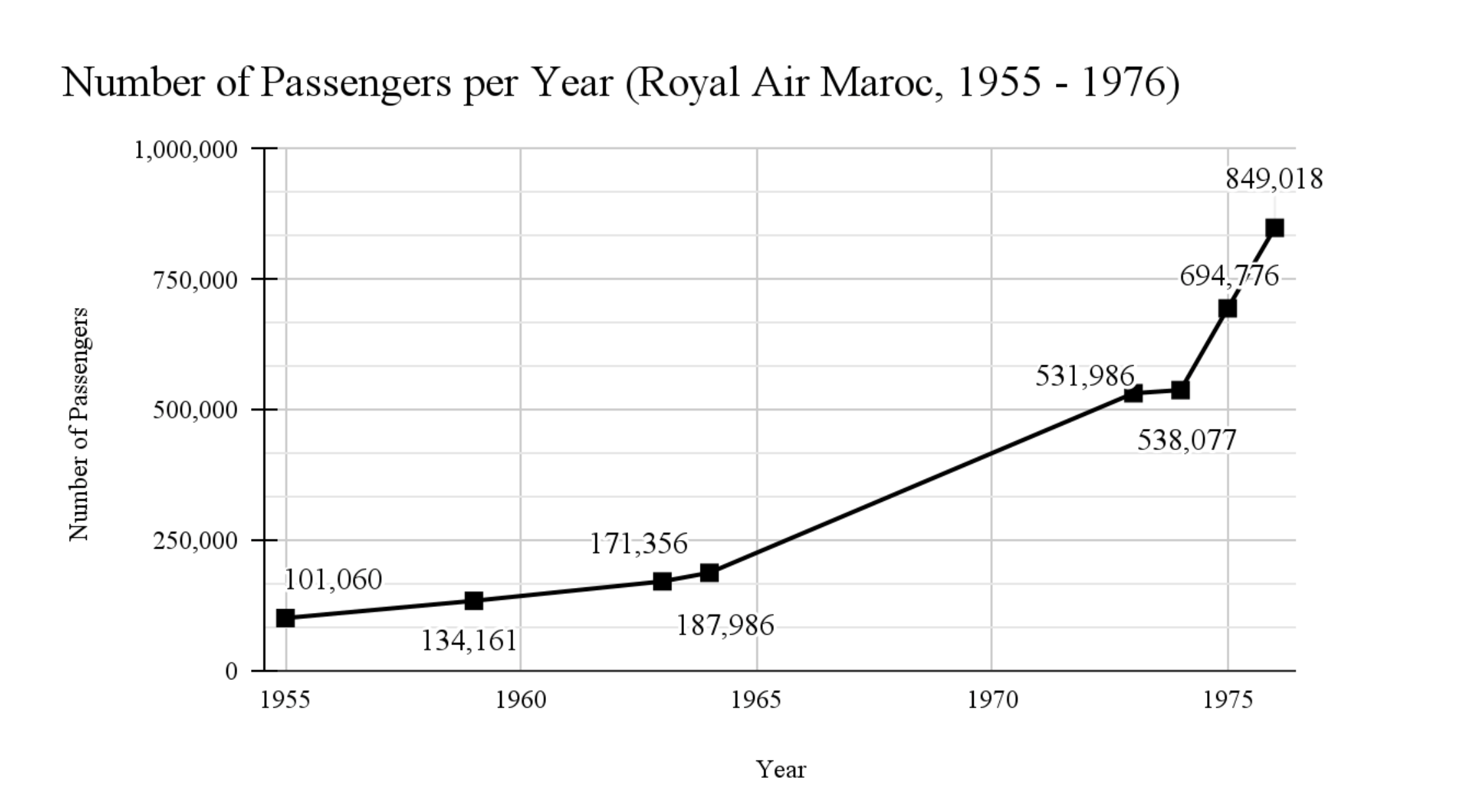
The deck carries the argument through the 1957 Air Atlas and Air Maroc merger, ownership changes over time, RAM growth metrics, national-prestige imagery, labor training, and a broader dataset of twentieth-century African airlines.
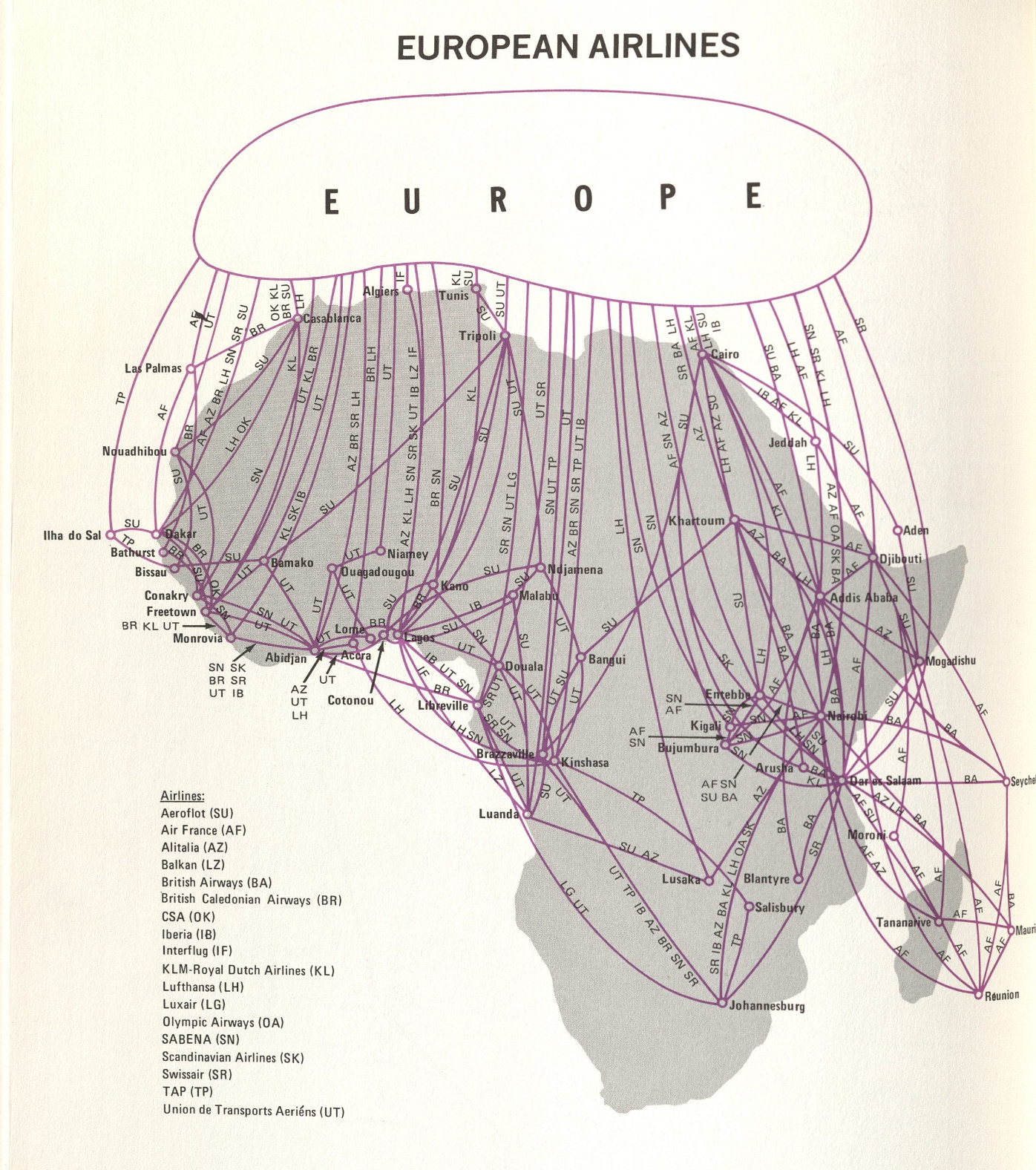
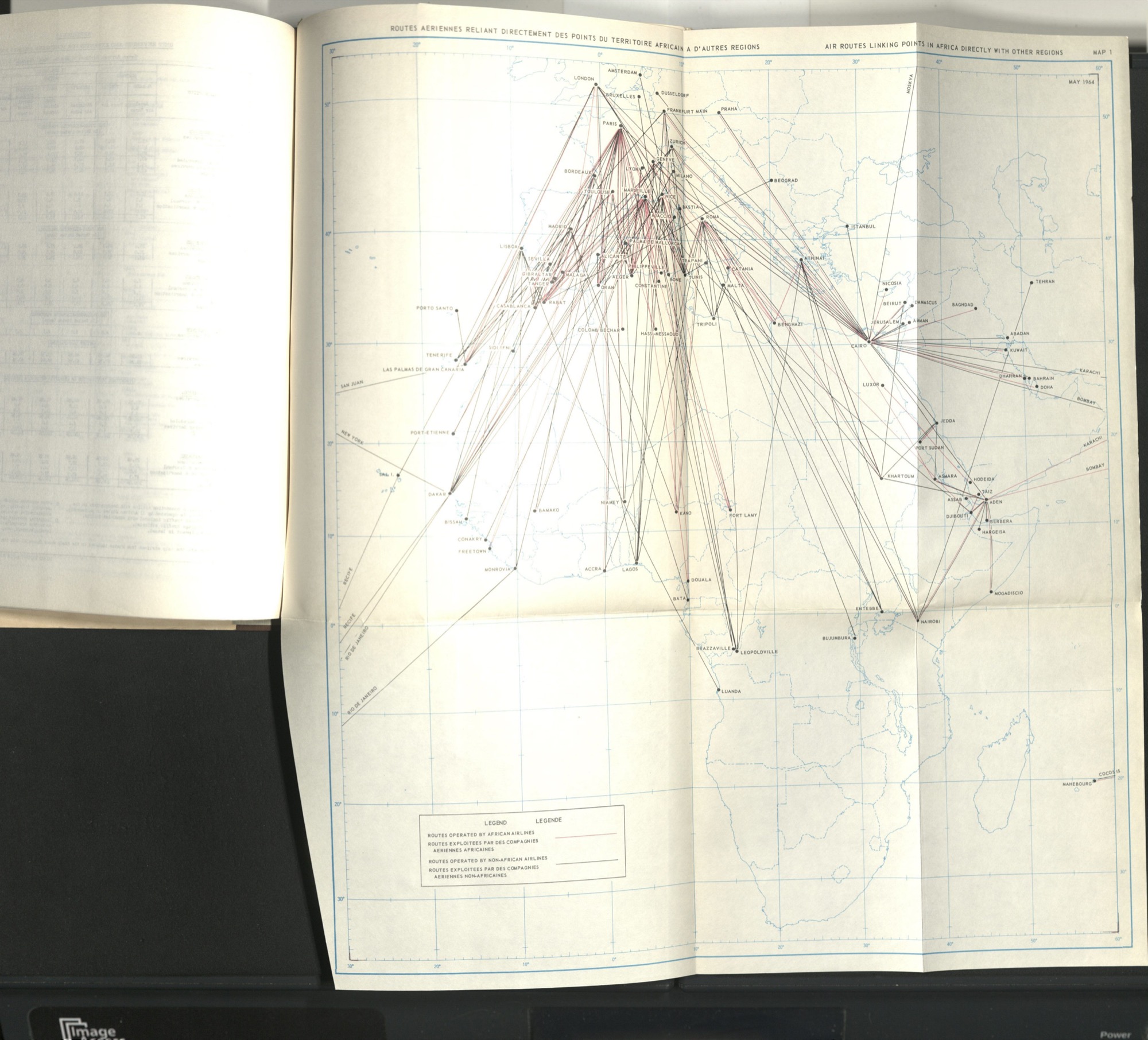
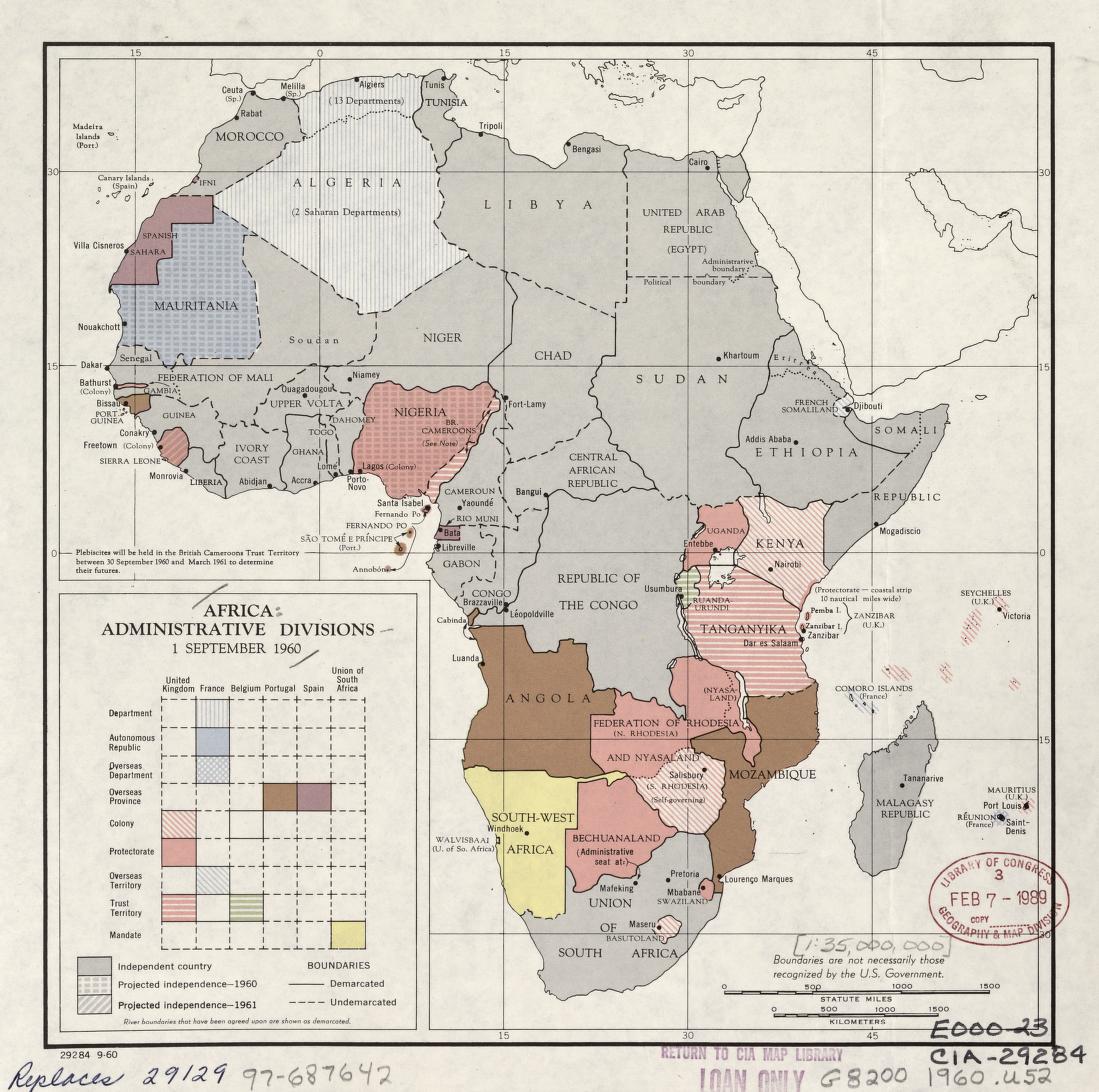
The artifact set below pairs the deck with the working atlas, a RAM ridership visual, and a primary-source route map so the page shows the research machinery rather than only describing it.
 View detail ↗
  View detail ↗
  View detail ↗
  View detail ↗
 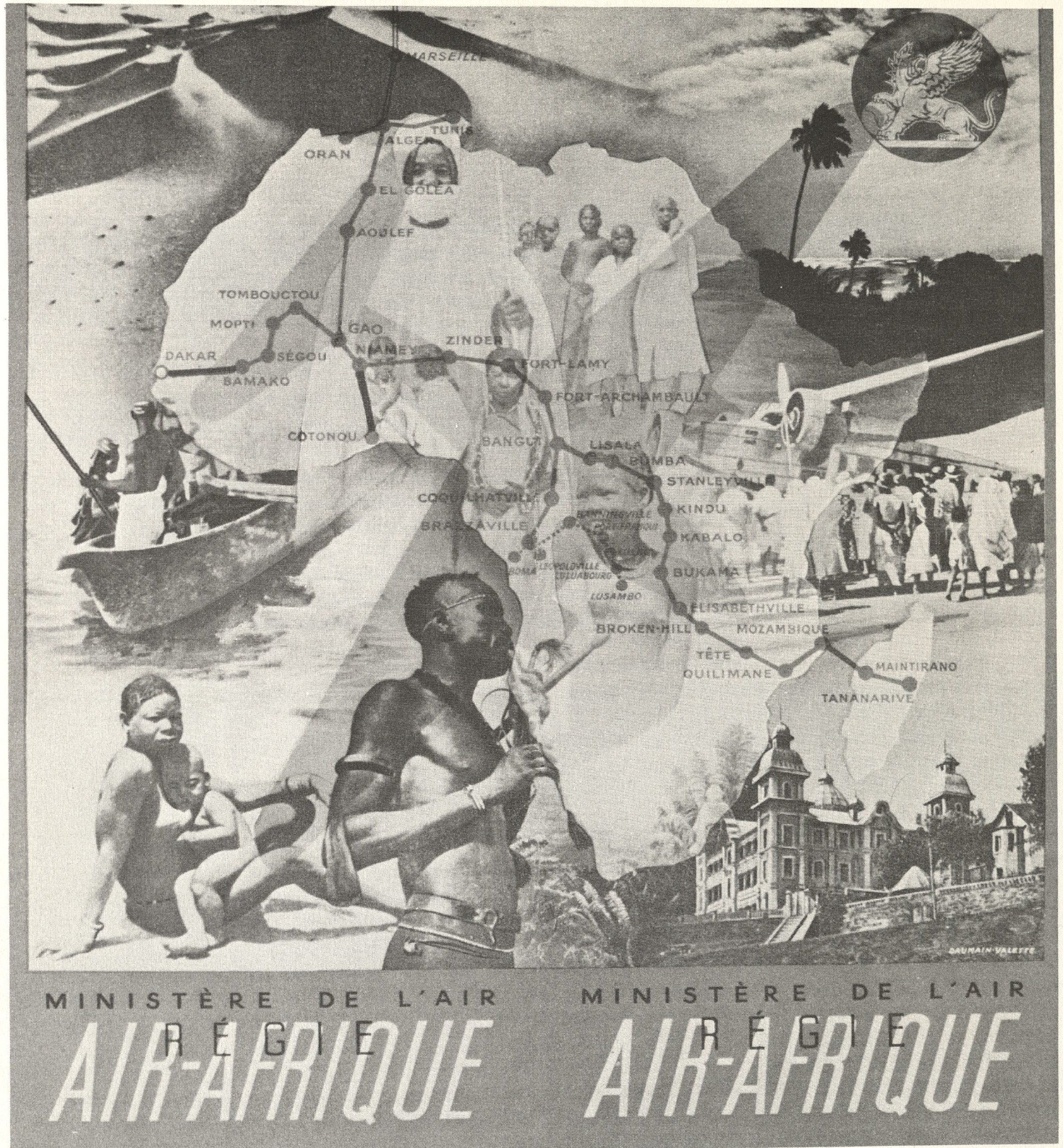 View detail ↗
 Why it matters
African airlines were built at a moment when the infrastructure of sovereignty was being assembled from scratch. Reading them as institutions, symbols, and data problems at once helps explain why flag carriers mattered even when pure market logic was weak.