Project
Truth After Tazmamart
A deck-first research project on Morocco's Equity and Reconciliation Commission, the Years of Lead, and the political logic of transitional justice without punishment.
 View detail ↗
 My role, areas & skills
The objective
Examine what truth-seeking can achieve when a transitional justice process limits punishment and accountability.
What I did
- Synthesized historical and legal research on Tazmamart and Morocco’s Equity and Reconciliation Commission.
- Built a written analysis and slide narrative explaining the political limits of reconciliation.
Deliverables
- Truth After Tazmamart research paper.
- Presentation deck and rendered slides.
Result
Produced a paper and presentation that make the argument and supporting material available for readers.
Enlarge slide ↗  Enlarge slide ↗
  Enlarge slide ↗
  Enlarge slide ↗
  Enlarge slide ↗
  Enlarge slide ↗
  Enlarge slide ↗
  Enlarge slide ↗
  Enlarge slide ↗
  Enlarge slide ↗
  Enlarge slide ↗
  Enlarge slide ↗
  Enlarge slide ↗
  Enlarge slide ↗
  Enlarge slide ↗
  Enlarge slide ↗
  Enlarge slide ↗
  Enlarge slide ↗
  Enlarge slide ↗
  Enlarge slide ↗
 Use the controls to browse 20 slides. Select an image for a larger view, or open the PDF.
Read extracted slide text
Text extracted from the original PDF. Image-only slides and visual relationships are not fully represented here; consult the slide image and the written project narrative.
Slide 1
Slide 2
Slide 3
Slide 4
Slide 5
Slide 6
Slide 7
Slide 8
Slide 9
Slide 10
Slide 11
Slide 12
Slide 13
Slide 14
Slide 15
Slide 16
Slide 17
Slide 18
Slide 19
Slide 20
Written paper
Overview
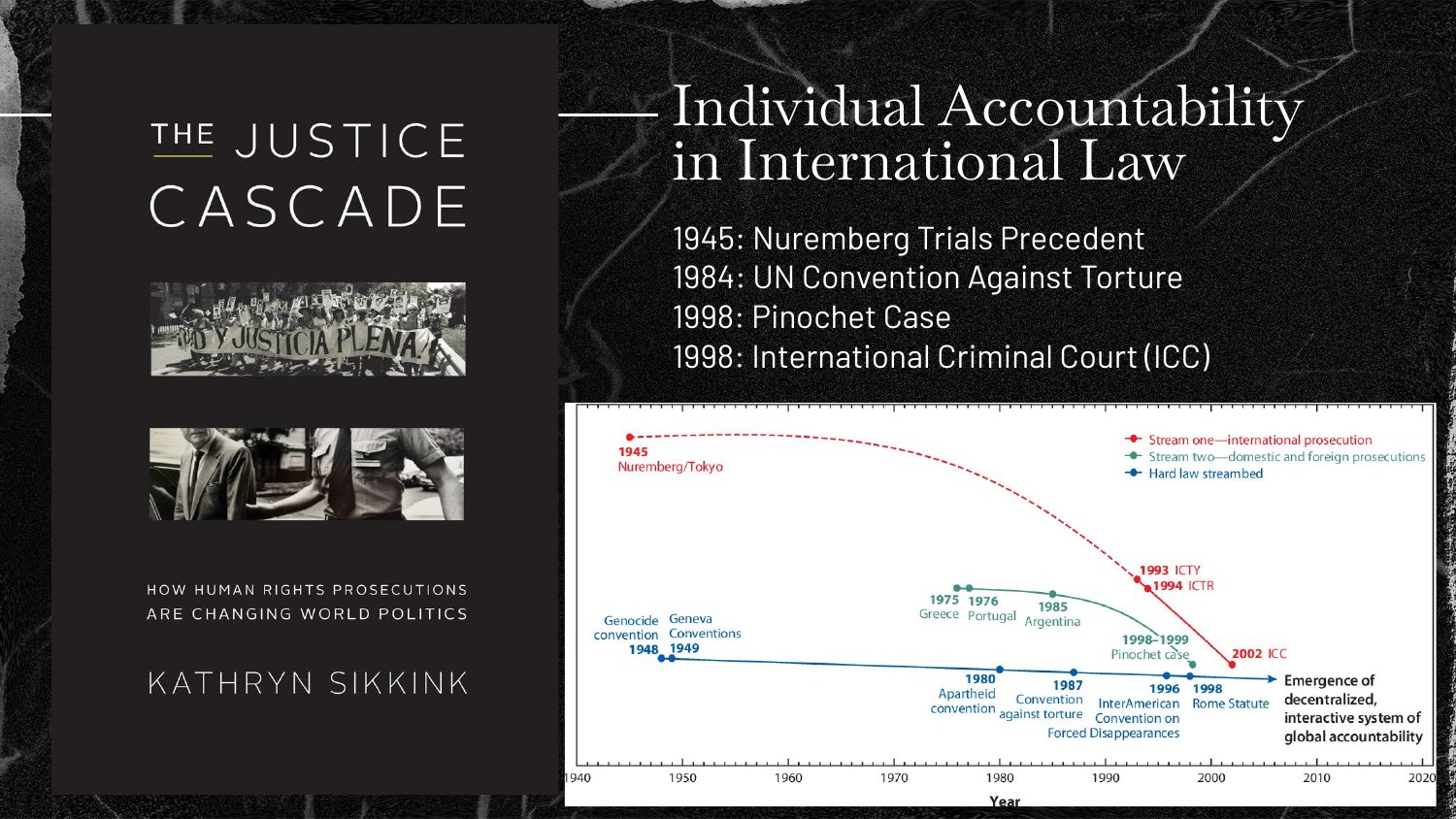
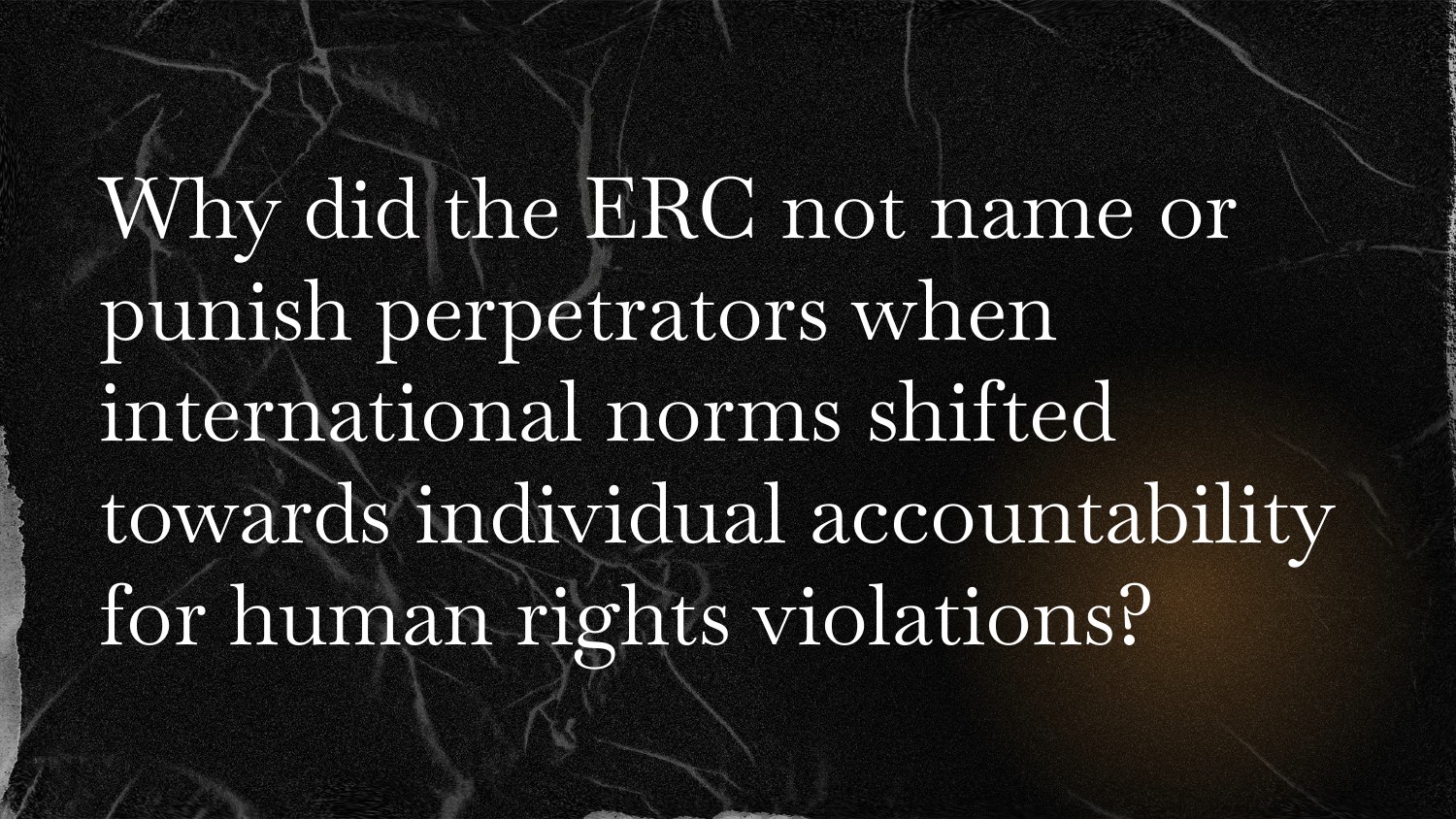
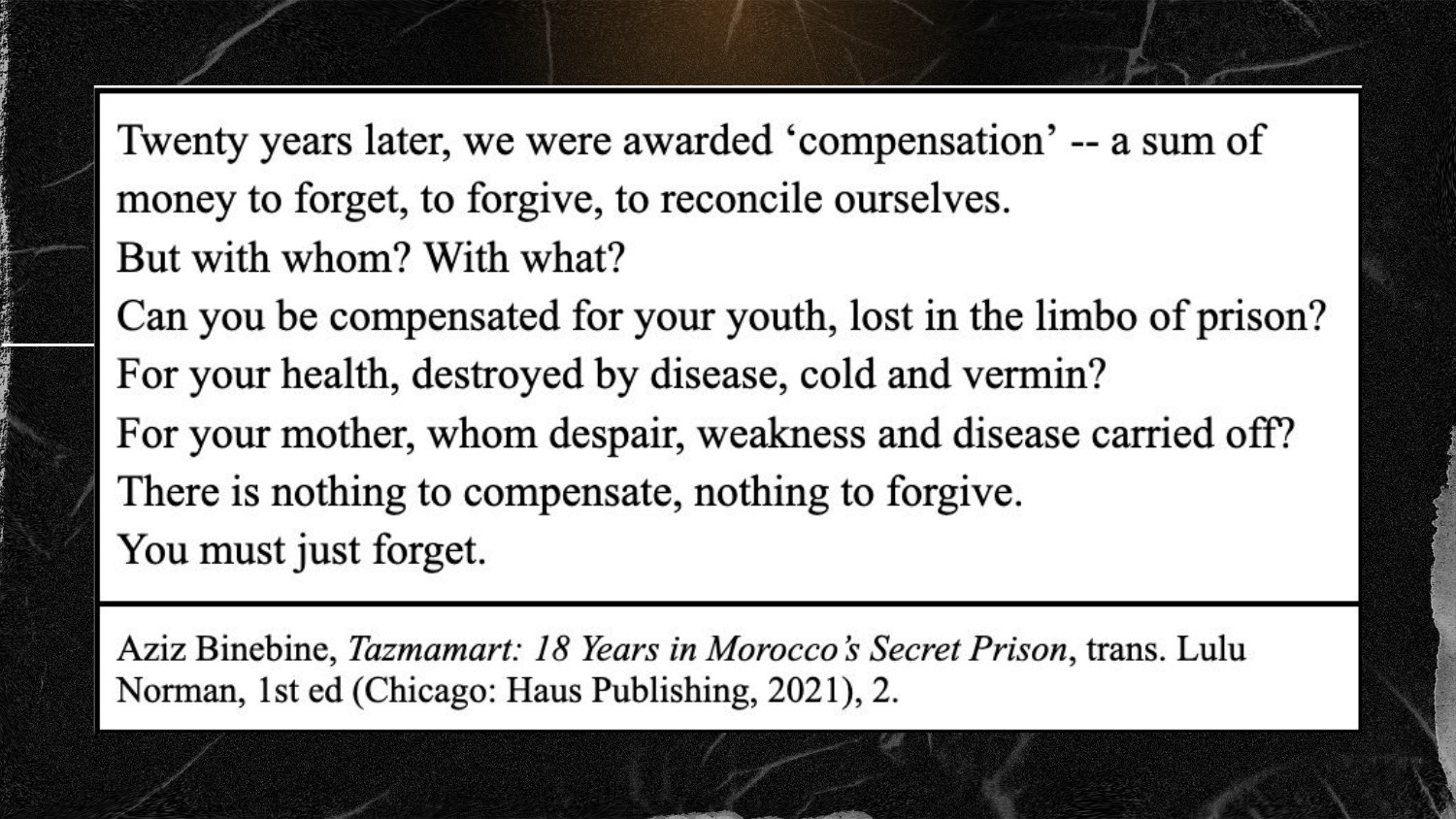
Truth After Tazmamart asks why Morocco's Equity and Reconciliation Commission did not name or punish perpetrators after the Years of Lead, even as international human-rights norms moved toward individual accountability.
The project treats that decision as a legal and political problem: not simply a failure to punish, but a choice about how far a monarchy-led truth process could go while preserving state legitimacy.
What the deck shows
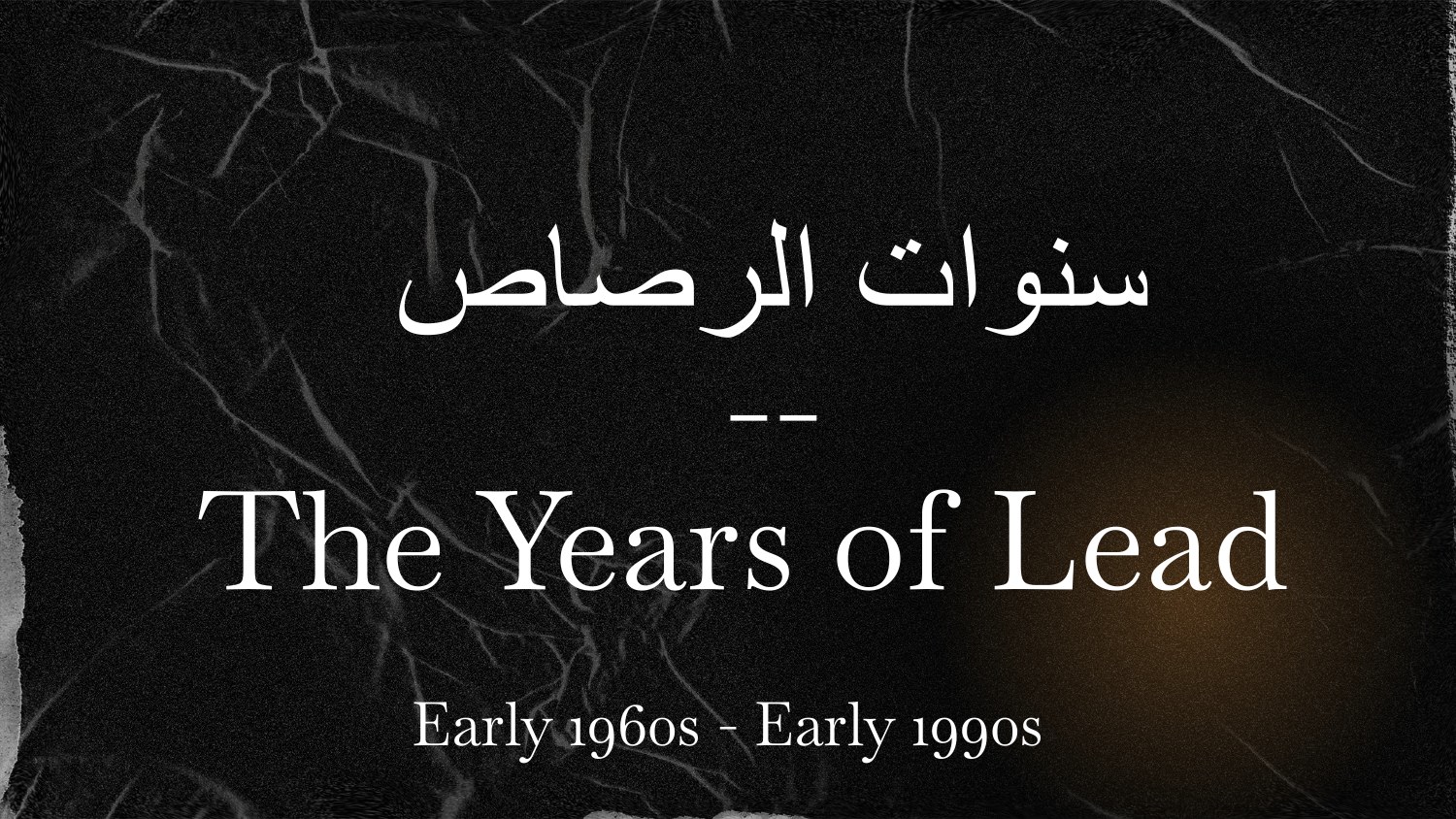
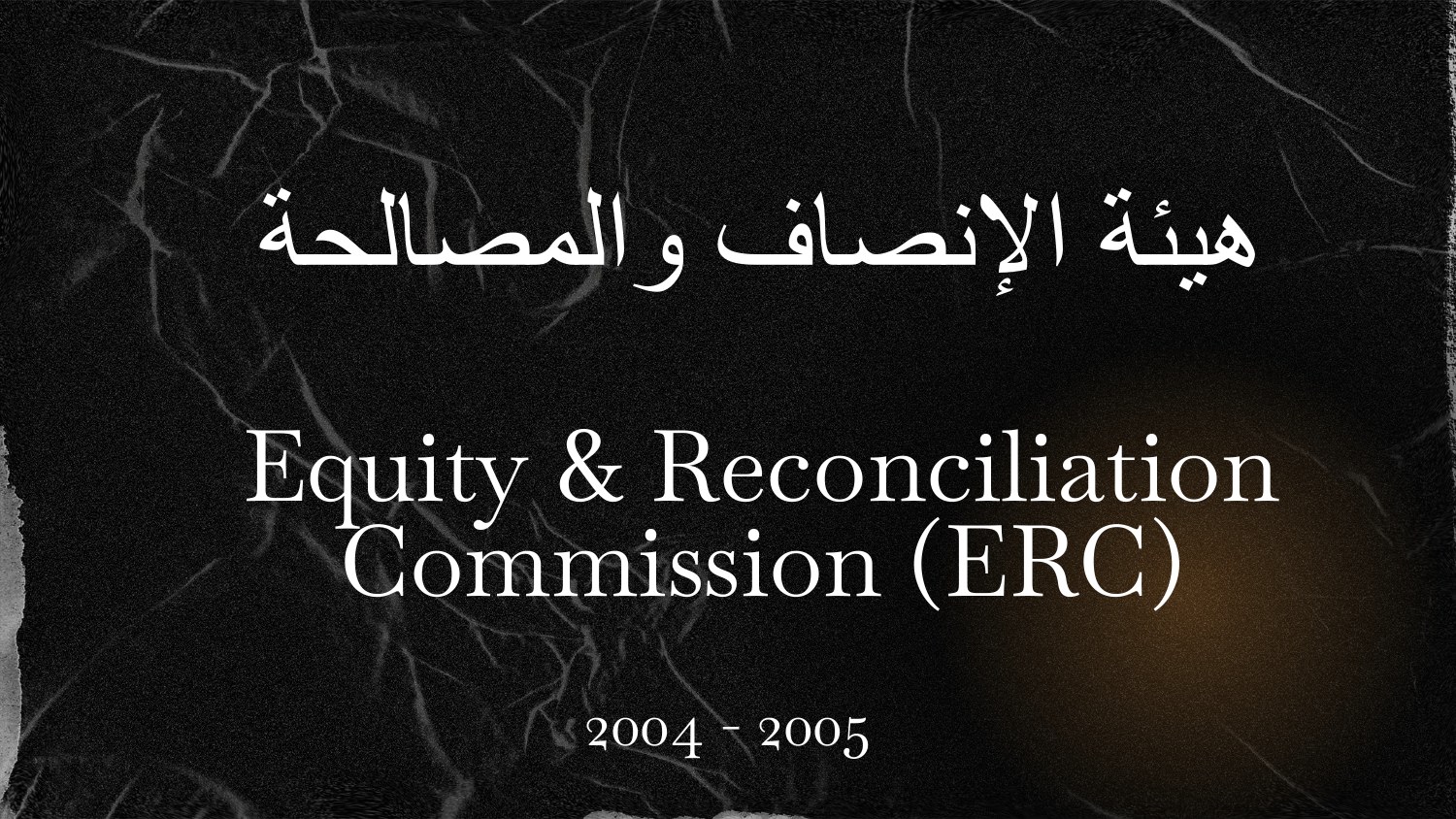
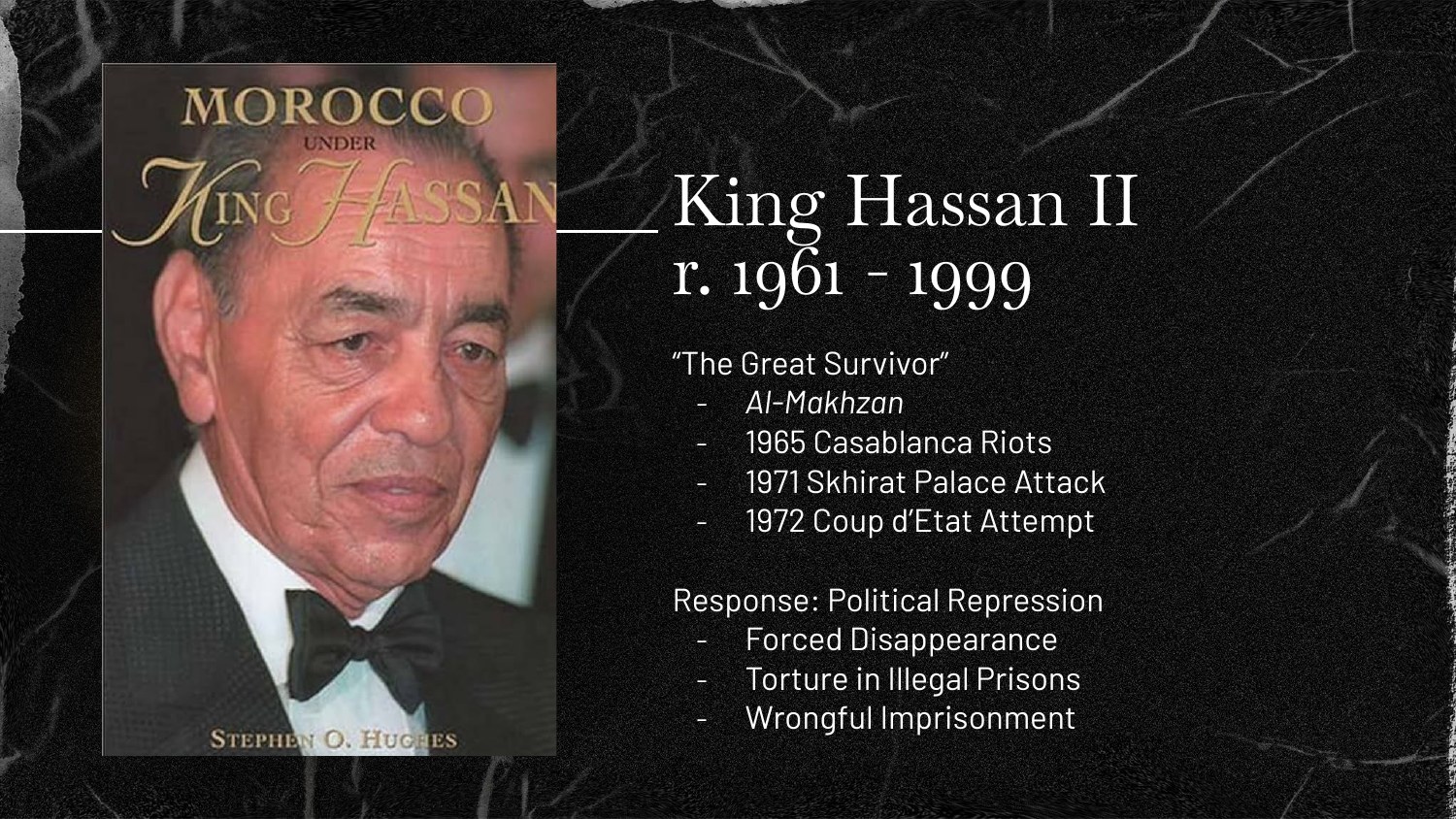
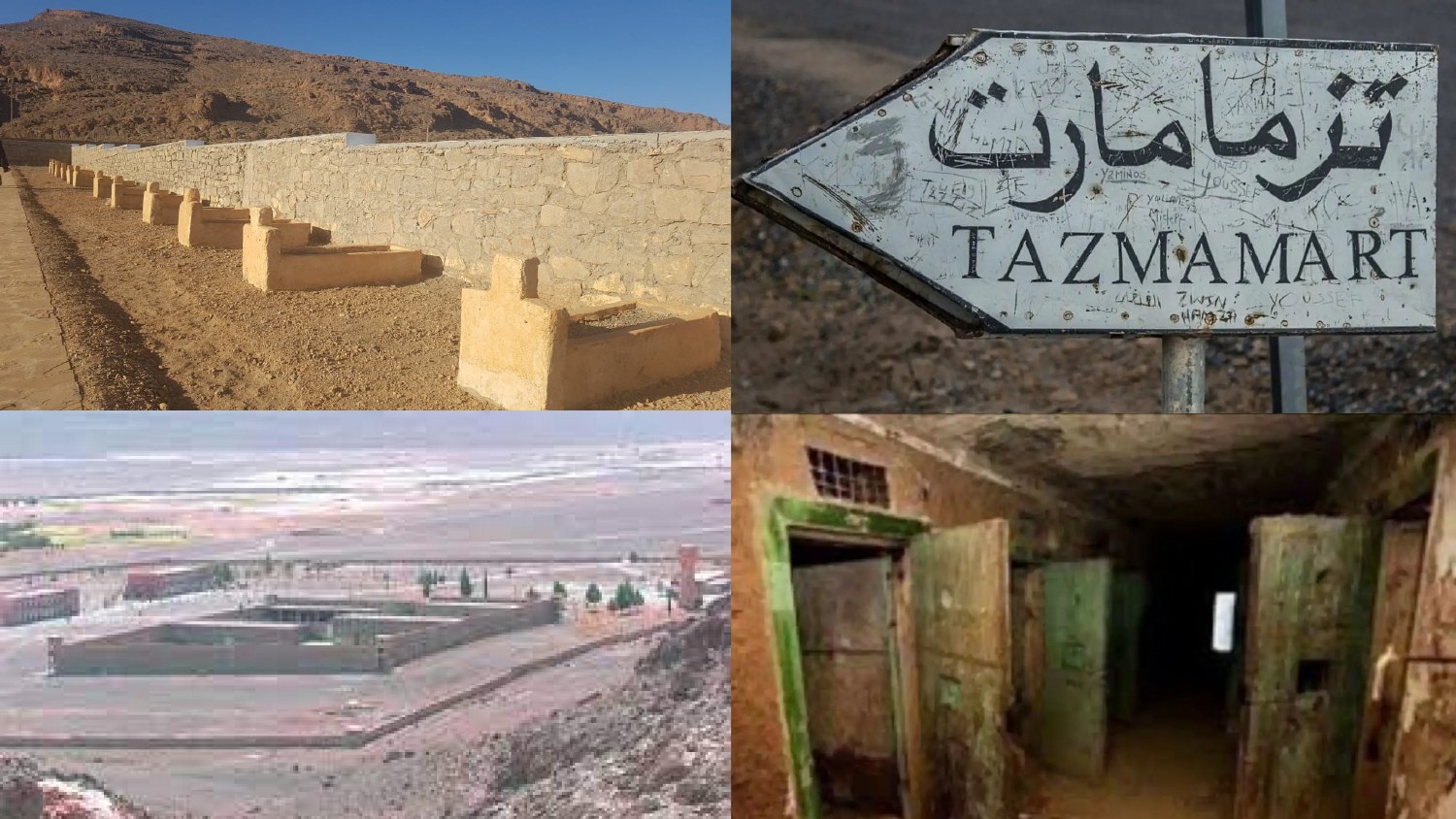
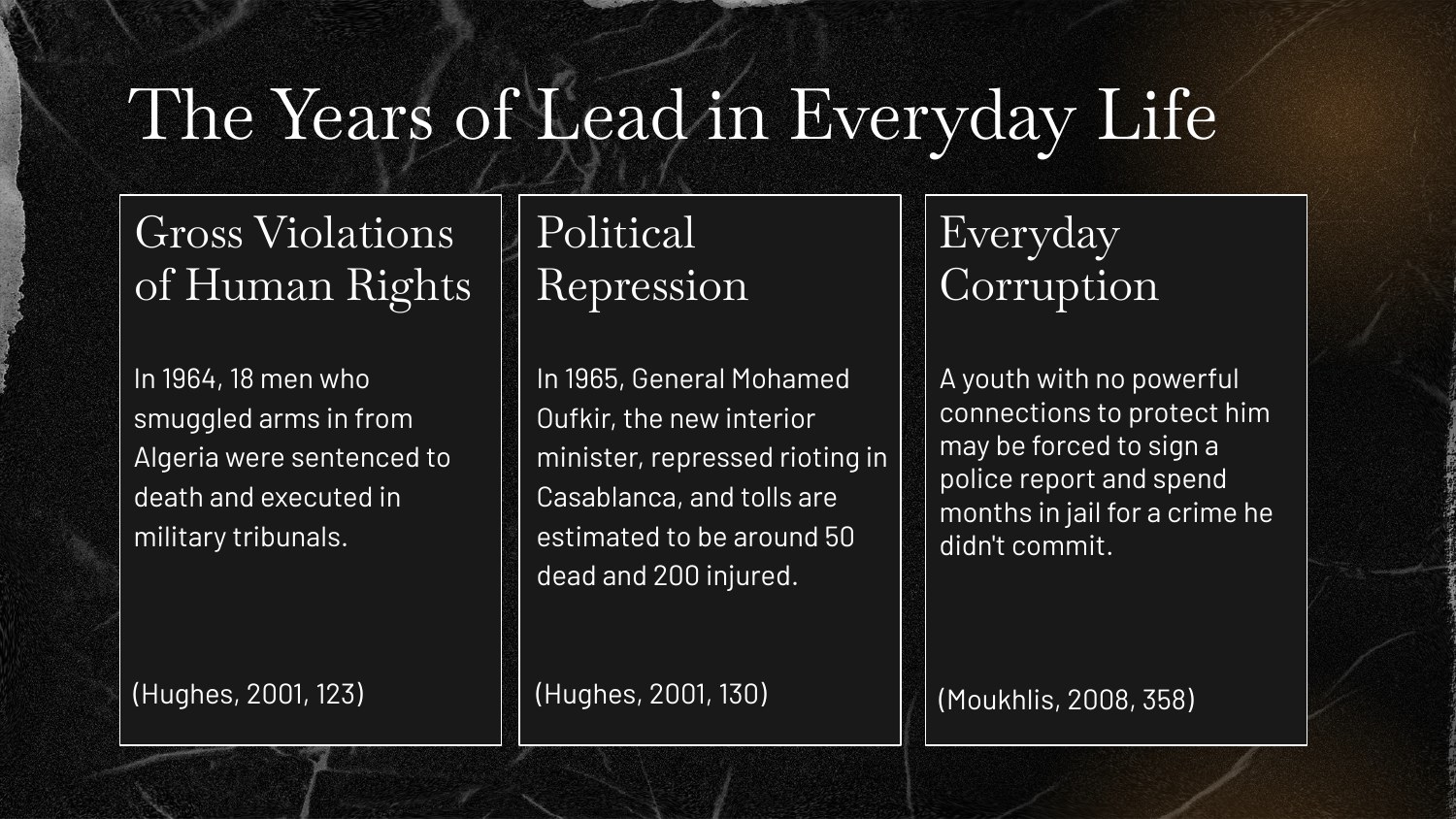
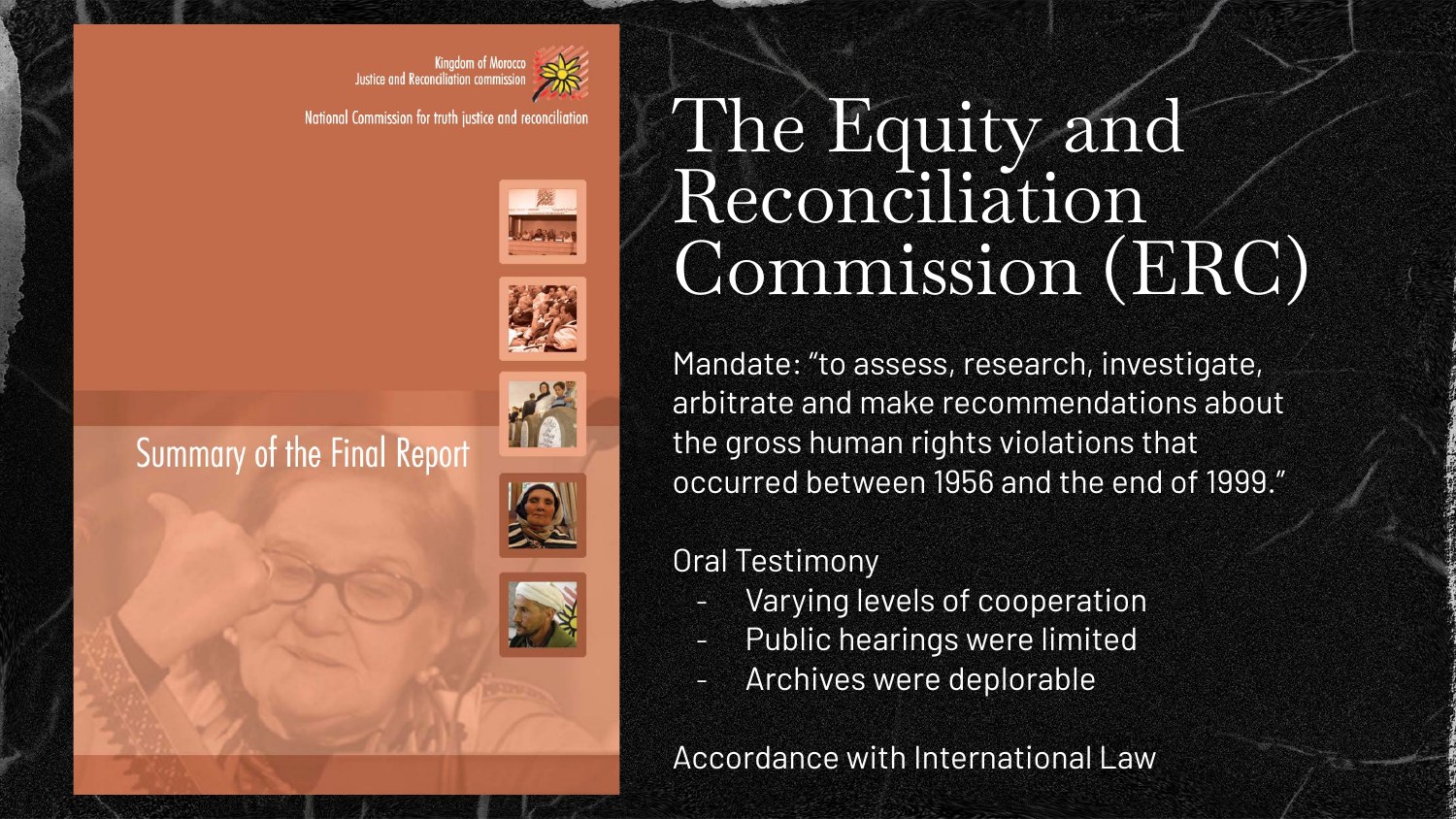
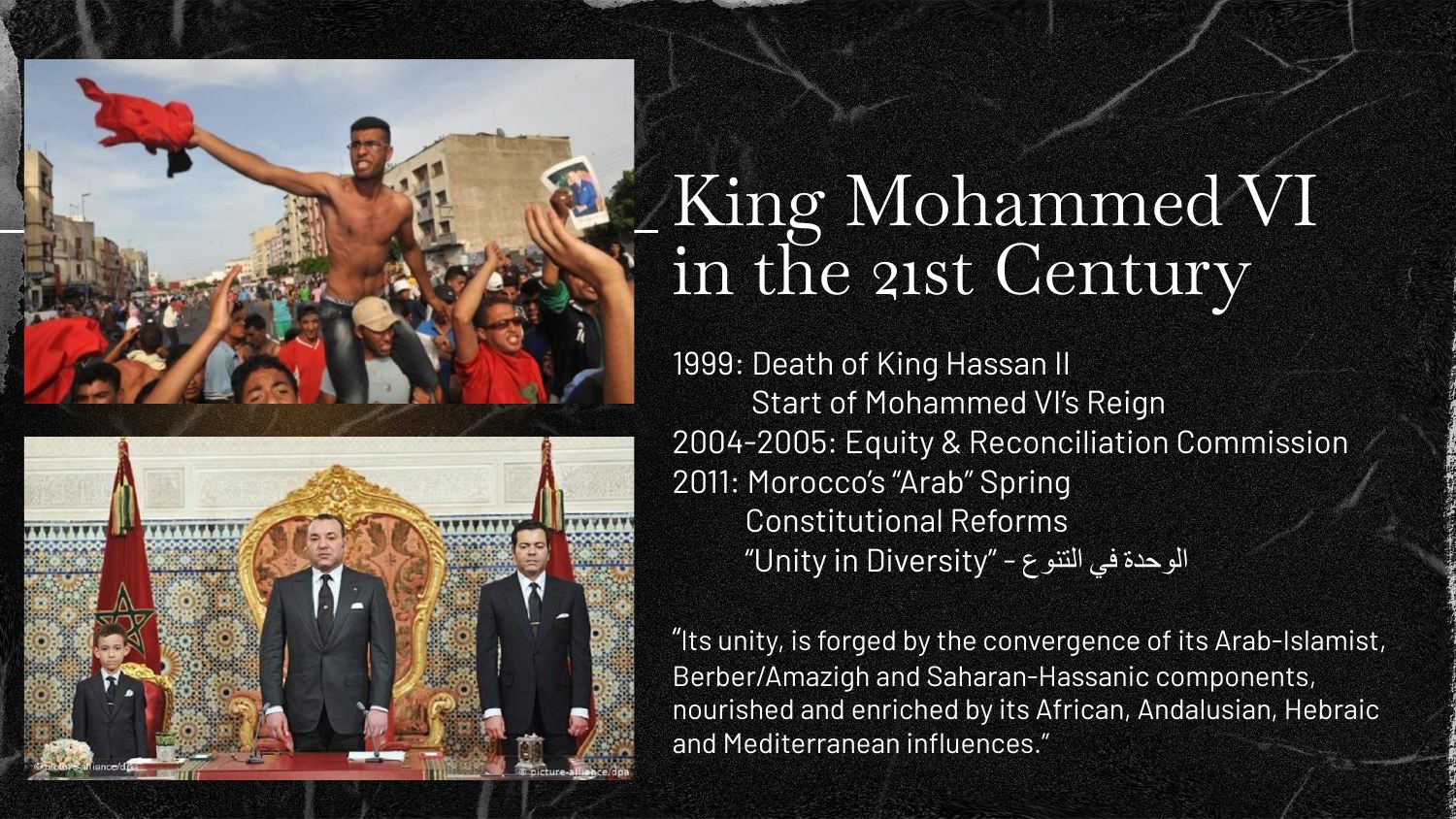
The deck introduces the Years of Lead, Tazmamart as a symbol of secret detention and state violence, the rise of international accountability norms, and the ERC mandate in 2004-2005.
It then frames the central argument: the ERC reduced pressure on the monarchy partly because it pursued public truth, compensation, and institutional repair without directly prosecuting perpetrators.
Why it matters
The project sits at the intersection of Moroccan history, international law, and public memory. It shows how transitional justice can produce real testimony and recognition while also protecting the political structures that shaped the violence.